

In this guide, you will learn how professionals are transitioning safely from salary employment into business ownership without creating unnecessary financial pressure.
You will also discover how digital assets, online income systems, automation tools, and operational planning are changing entrepreneurship across Nigeria in 2027.
Why Full-Time Business Ownership in Nigeria Is Growing in 2027
Several economic and technological changes are influencing career decisions across Africa.
Many professionals now want:
- Additional income streams
- Greater flexibility
- Long-term financial control
- Scalable digital income opportunities
- Reduced dependence on unstable employment markets
According to reports from the World Bank and Statista, entrepreneurship and digital business activity continue expanding across African markets.
As internet penetration and mobile technology improve, more Nigerians are exploring business ownership while still employed.
Do Not Rush Into Full-Time Business Ownership in Nigeria
One of the biggest mistakes aspiring entrepreneurs make is resigning emotionally instead of strategically.
Many businesses require time to:
- Build customer trust
- Develop recurring revenue
- Create operational systems
- Understand market behavior
- Improve profitability
Even businesses that appear successful online may still experience unstable cash flow during the early stages.
Maintaining salary income while building your business can reduce financial pressure significantly.
The Safest Path to Full-Time Business Ownership in Nigeria
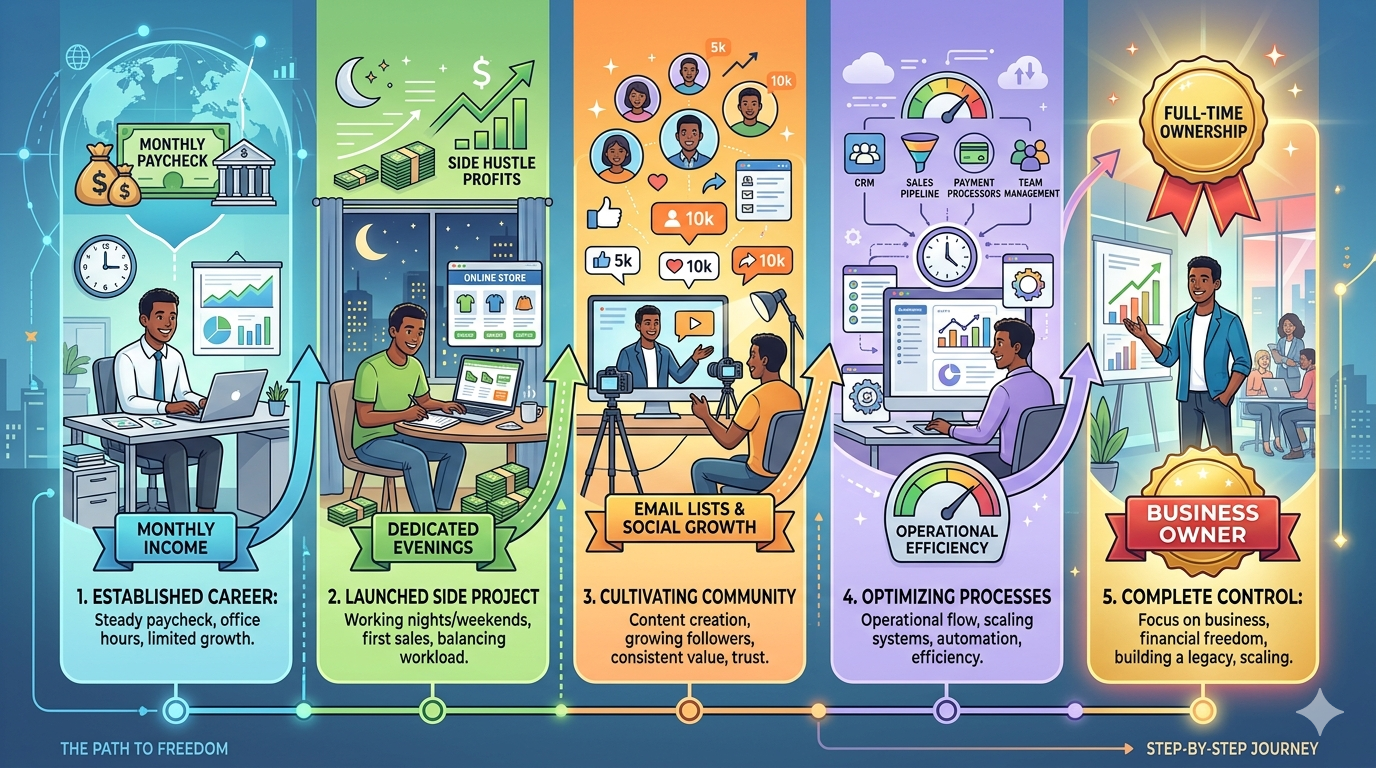
Many successful founders now follow a gradual transition model instead of making sudden career exits.
The process often looks like this:
- Salary Employment Stage — Stable income and skill development
- Side Business Stage — Testing products and services
- Audience Building Stage — Growing visibility and customer trust
- System Building Stage — Creating business infrastructure
- Full-Time Transition Stage — Leaving employment after stability improves
This model allows entrepreneurs to learn gradually while minimizing unnecessary risk.
Start With Realistic Expectations
Many people begin entrepreneurship through small online income methods such as:
- Freelancing
- Affiliate marketing
- Social media management
- Content creation
- Online tutoring
- Digital product sales
These methods can provide useful experience and generate small income streams.
However, it is important to stay realistic.
Most beginner online income methods do not produce large or stable wealth immediately. They are usually starting points for learning business operations, customer acquisition, digital marketing, and audience growth.
Why Scalable Digital Assets Matter More Than Ever
Long-term Full-Time Business Ownership in Nigeria increasingly depends on scalable digital systems.
Many entrepreneurs are now building:
- Websites and blogs
- YouTube channels
- Mobile applications
- Email marketing systems
- Digital media platforms
Unlike temporary online gigs, digital assets can continue generating traffic, customers, and revenue over time.
Some business-focused development teams such as Valspill Team help entrepreneurs structure these digital assets correctly for monetization and long-term growth.
The progression usually follows this pattern:
Learning → Small Income → Audience Building → Digital Assets → Scalable Revenue
Financial Planning for Full-Time Business Ownership in Nigeria
Before leaving employment, entrepreneurs should create financial safety systems.
Important preparation steps include:
- Building emergency savings
- Reducing unnecessary debt
- Creating multiple income streams
- Stabilizing business cash flow
- Understanding operational costs
Many business advisors recommend maintaining 6–12 months of living expenses before transitioning fully.
This creates flexibility during difficult periods.
Separate Personal and Business Finances Early
Many small business owners struggle because they mix personal and business finances.
This creates confusion around:
- Profitability
- Cash flow
- Taxes
- Business expenses
- Operational planning
Entrepreneurs pursuing Full-Time Business Ownership in Nigeria should treat their businesses professionally from the beginning.
Understand Hidden Costs Before Scaling
Some businesses appear profitable initially but later struggle because founders underestimate operational costs.
Common hidden expenses include:
- Logistics
- Inventory losses
- Customer acquisition costs
- Software subscriptions
- Currency exchange fluctuations
- Marketing expenses
- Delivery delays
This guide explains how African businesses now calculate profitability more accurately: How to Calculate Business Profit in Africa (Including Hidden Costs, FX & Logistics 2026).
Business Registration Builds Long-Term Trust
Proper business registration improves credibility with:
- Customers
- Financial institutions
- Investors
- Suppliers
- Corporate partners
Registered businesses often appear more trustworthy than informal operations.
This guide explains CAC registration costs, hidden fees, and timelines: Company Registration Cost in Nigeria (2026): Hidden Fees, CAC Charges & Processing Time.
Protect Your Brand Identity Early
As businesses grow, brand protection becomes increasingly important.
Trademark registration helps reduce:
- Brand imitation risks
- Identity conflicts
- Legal disputes
- Customer confusion
This guide explains trademark registration processes in Nigeria: Protect Business Name in Nigeria (Trademark Registration Guide 2026/2027).
Realistic Example: Abuja Employee to Online Business Owner
Consider a realistic example.
An Abuja-based accountant started a small online bookkeeping service while working full-time.
Initially, the business generated inconsistent income.
Instead of resigning immediately, the founder spent two years:
- Building recurring customers
- Creating educational content online
- Developing a professional website
- Automating invoicing systems
- Expanding referral networks
By the time the founder transitioned into Full-Time Business Ownership in Nigeria, the business already had stronger operational stability.
This reduced financial stress significantly.
Why Entrepreneur Burnout Is Increasing
Many solo entrepreneurs attempt to manage:
- Marketing
- Operations
- Finance
- Customer support
- Content creation
- Business strategy
without operational systems.
This often leads to stress and decision fatigue.
AI tools and automation platforms are now helping entrepreneurs reduce repetitive workloads.
This guide explores how AI support systems are changing entrepreneurship: Entrepreneur Burnout Solo Founders (Why AI Co-Founders Change Everything in 2026).
Build Systems Before You Scale
Many entrepreneurs focus heavily on sales while ignoring systems.
However, sustainable Full-Time Business Ownership in Nigeria usually depends on:
- Customer management systems
- Automation tools
- Financial tracking
- Marketing processes
- Operational workflows
Businesses with organized systems often scale more smoothly.

Insurance Helps Protect Business Stability
Unexpected operational problems can damage business income quickly.
SME insurance may help protect businesses from:
- Inventory losses
- Property damage
- Operational interruptions
- Liability claims
This guide explains SME insurance options available in Nigeria: SME Business Insurance in Nigeria (Best Coverage Options in Africa 2026/2027).
Franchise vs Independent Business Ownership
Some entrepreneurs prefer starting independent businesses from scratch.
Others choose franchise or licensing models with established systems.
Both approaches have different advantages and risks.
This guide compares both models in African markets: Franchise vs Licensing In Africa: Which Business Model Is More Profitable in 2027?.
Why Diversified Income Streams Matter
Relying on one customer or one income source creates financial vulnerability.
Businesses with diversified revenue systems are often more stable during market changes.
Entrepreneurs pursuing Full-Time Business Ownership in Nigeria should gradually develop:
- Multiple customer channels
- Digital products
- Audience systems
- Service diversification
- Long-term marketing strategies
Develop a Strong Online Presence
Modern customers often research businesses online before purchasing.
A strong online presence may include:
- Professional websites
- Search engine visibility
- Social media branding
- Customer testimonials
- Email marketing systems
Digital visibility now plays a major role in customer trust and business growth.
Common Mistakes in Full-Time Business Ownership in Nigeria
1. Quitting Employment Too Early
Emotional decisions often create unnecessary pressure.
2. Ignoring Financial Planning
Cash flow instability affects many new businesses.
3. Failing to Build Systems
Operational chaos limits scalability.
4. Depending on One Income Source
Diversification improves stability.
5. Neglecting Digital Visibility
Weak online presence reduces customer trust.
The Future of Full-Time Business Ownership in Nigeria
Full-Time Business Ownership in Nigeria will continue expanding as digital technology, AI systems, remote work, and online commerce reshape African economies.
However, sustainable entrepreneurship usually depends on:
- Long-term consistency
- Operational discipline
- Scalable digital assets
- Financial planning
- Audience growth
Businesses that combine technology with strong systems often position themselves more effectively for future growth.
Final Thoughts
Transitioning into Full-Time Business Ownership in Nigeria is a major financial and personal decision.
While entrepreneurship can create flexibility and long-term opportunities, rushing the process without preparation can create avoidable stress.
Many successful entrepreneurs begin with small income opportunities, learn business systems gradually, build audiences carefully, and develop scalable digital assets over time.
Small online income methods may provide useful starting experience, but sustainable long-term success increasingly depends on structure, operational systems, audience ownership, and financial discipline.
If you are considering Full-Time Business Ownership in Nigeria in 2027, focus less on quick results and more on building systems that can support long-term growth sustainably.
Frequently Asked Questions (FAQ)
What is Full-Time Business Ownership in Nigeria?
Full-Time Business Ownership in Nigeria refers to operating a business as your primary source of income instead of relying on salary employment.
Should I quit my job before starting a business?
Many entrepreneurs build businesses gradually while maintaining salary income initially to reduce financial pressure.
Can online businesses support Full-Time Business Ownership in Nigeria?
Yes. Websites, YouTube channels, apps, consulting services, and digital products are increasingly supporting scalable entrepreneurship.
How long does it take to build stable business income?
It varies by industry, operational systems, customer acquisition, and business strategy. Many businesses require time to stabilize revenue.
Why are digital assets important?
Digital assets can continue generating traffic, customers, and revenue over time, making businesses more scalable.
How can entrepreneurs reduce burnout?
Automation tools, delegation, AI systems, operational structure, and financial planning can help reduce stress significantly.