


- How to calculate business profit in Africa step-by-step
- The exact difference between revenue and profit
- How hidden costs quietly reduce earnings
- Why FX losses matter in African markets
- How logistics costs affect SMEs
- Real examples of African business profit calculations
- How to improve profit margins sustainably
- Why scalable digital assets create stronger long-term income opportunities

Why Understanding How to Calculate Business Profit in Africa Matters in 2026
African businesses operate in environments where costs change rapidly. Exchange rates fluctuate, transportation expenses increase unexpectedly, and supplier pricing can shift within weeks.
Because of these realities, many businesses overestimate profitability.
For example, an online electronics seller may see strong monthly sales but still lose money because of:
- Import duties
- Warehouse fees
- Fuel costs
- Delivery returns
- Currency depreciation
- Payment processing charges
According to data from the World Bank, operational inefficiencies and logistics costs remain major barriers for SMEs across emerging African markets.
Businesses that understand how to calculate business profit in Africa properly make smarter decisions about pricing, expansion, staffing, inventory, and growth.
What Is Business Profit?
Business profit is the money left after subtracting all business expenses from total revenue.
However, many entrepreneurs confuse revenue with profit.
Revenue is the total money earned from sales.
Profit is what remains after all expenses are paid.
The real formula looks like this:
Net Profit = Revenue − (Product Costs + Logistics + Taxes + FX Losses + Marketing + Salaries + Utilities + Operational Expenses)
This is why businesses with high sales can still struggle financially.
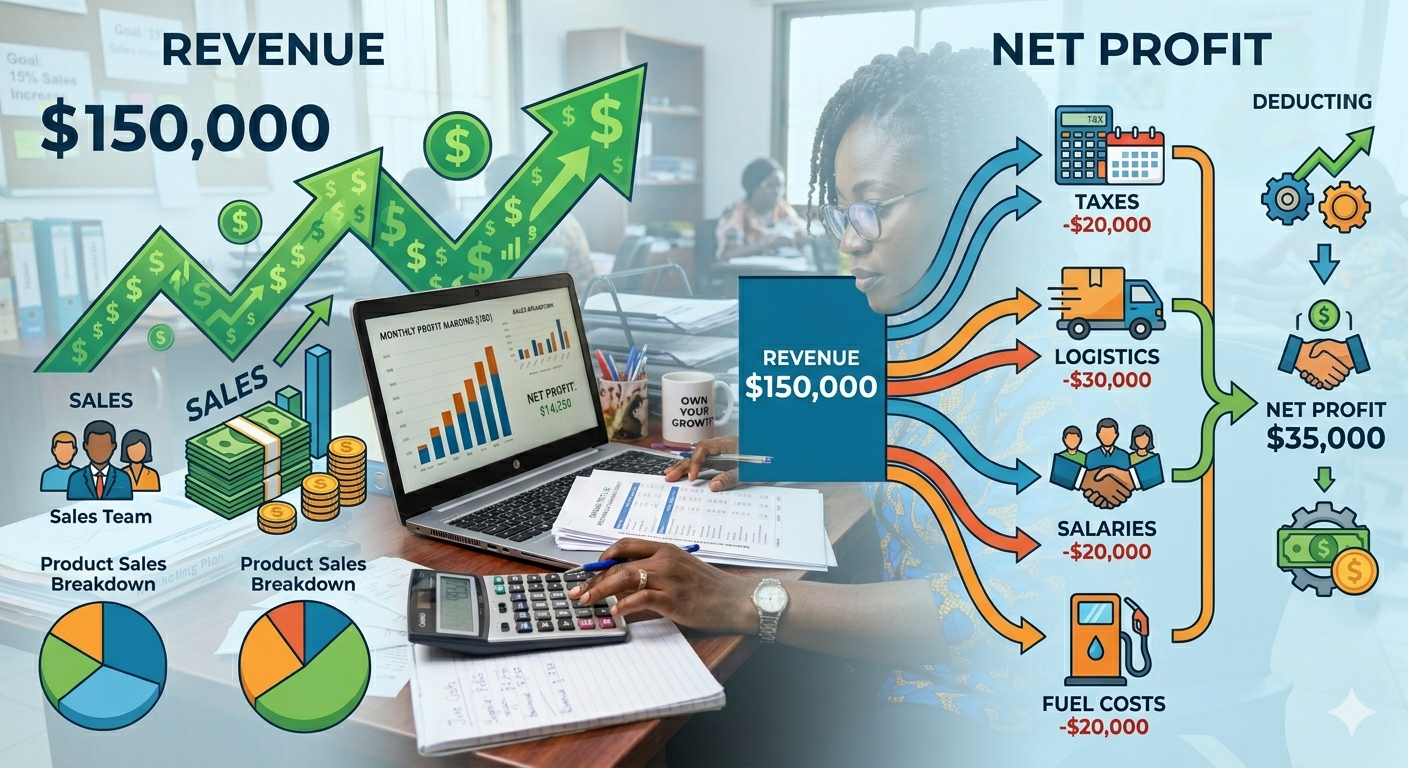
How to Calculate Business Profit in Africa Step-by-Step
Step 1: Calculate Total Revenue
Total revenue includes all incoming business income before expenses.
Examples include:
- Product sales
- Consulting fees
- Subscription payments
- Delivery fees
- Advertising revenue
- Affiliate commissions
Example:
- Product sales = ₦12,000,000
- Delivery charges = ₦800,000
- Affiliate earnings = ₦200,000
Total Revenue = ₦13,000,000
Step 2: Calculate Cost of Goods Sold (COGS)
COGS represents the direct cost of producing or purchasing products sold.
This includes:
- Inventory purchases
- Raw materials
- Packaging
- Production labor
Example:
- Inventory = ₦5,000,000
- Packaging = ₦350,000
- Production labor = ₦450,000
Total COGS = ₦5,800,000
Gross Profit = Revenue − COGS
₦13,000,000 − ₦5,800,000 = ₦7,200,000
Hidden Costs That Quietly Reduce Business Profit
This is where many entrepreneurs make mistakes when learning how to calculate business profit in Africa.
Most businesses only track obvious expenses while ignoring operational leakages.
Foreign Exchange (FX) Losses
FX volatility affects importers, SaaS businesses, freelancers, and companies paying international suppliers.
Suppose your inventory was budgeted at ₦1,500/$ but the exchange rate rises to ₦1,700/$ before payment. Your costs immediately increase.
The International Monetary Fund (IMF) continues to highlight inflation and currency risks across emerging markets.
Logistics and Delivery Costs
Transportation costs across Africa continue to rise because of:
- Fuel price increases
- Poor road infrastructure
- Port congestion
- Customs delays
- Cross-border transport costs
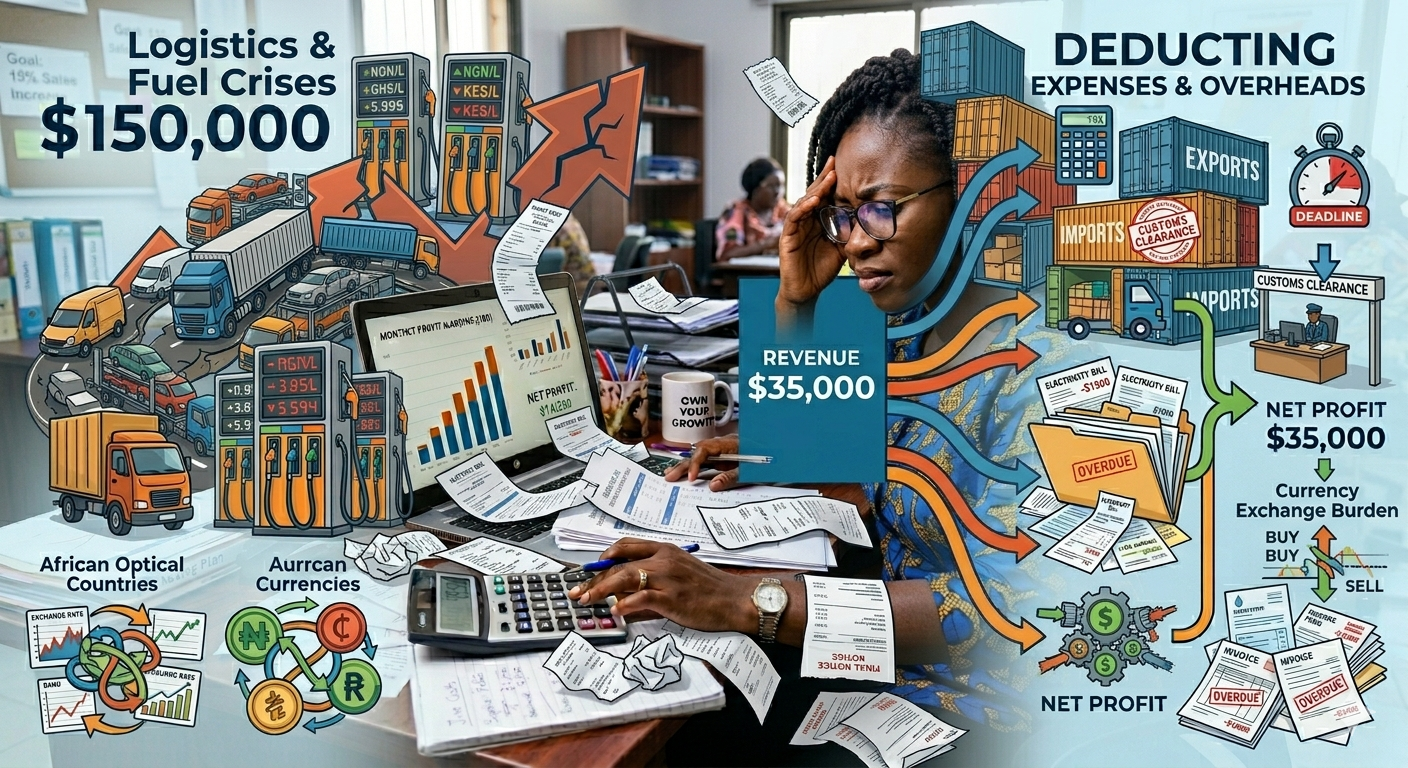
Businesses planning regional expansion should also understand Operate Business Across Africa AfCFTA (No Need for Multiple Registrations in 2026).
Payment Gateway Charges
Online businesses often forget:
- Paystack fees
- Flutterwave charges
- Stripe conversion costs
- Bank transfer expenses
These small charges accumulate quickly at scale.
Electricity and Generator Costs
Many businesses across Africa rely on backup power systems.
Expenses may include:
- Fuel
- Generator maintenance
- Solar backup systems
- Inverter batteries
Returns and Damaged Goods
ECommerce businesses frequently lose money from:
- Failed deliveries
- Refunds
- Product damage
- Inventory loss
Real Example of How to Calculate Business Profit in Africa
Case Study: Small Fashion Import Business in Nigeria
A clothing business imports fashion products from Turkey into Lagos.
Monthly Revenue:
- Online sales = ₦18,500,000
Monthly Expenses:
- Inventory purchase = ₦8,200,000
- Shipping and customs = ₦2,100,000
- Warehouse rent = ₦700,000
- Marketing = ₦950,000
- Staff salaries = ₦1,350,000
- Generator and electricity = ₦480,000
- Payment gateway fees = ₦240,000
- FX losses = ₦900,000
- Product returns = ₦350,000
Total Expenses = ₦15,270,000
Actual Net Profit = ₦3,230,000
At first glance, the business appeared extremely profitable because sales were high. However, after calculating all operational expenses, actual margins became much smaller.
Gross Profit vs Net Profit
| Type | Meaning |
|---|---|
| Gross Profit | Revenue minus direct product costs |
| Net Profit | Revenue minus ALL business expenses |
Many entrepreneurs celebrate gross profit while ignoring their actual net earnings.
This becomes dangerous during expansion because operational costs grow quickly.
You may also enjoy reading Scalable Business Definition Investors 2026: Why Most Startups Fail Scalability Tests Before Profit.
How Taxes Affect Business Profit in Africa
Taxes vary across African countries, but businesses commonly deal with:
- Corporate income tax
- VAT
- Import duties
- Employee PAYE taxes
- Withholding tax
Businesses that ignore tax planning often face serious cash flow problems later.
Official agencies such as the Federal Inland Revenue Service (FIRS) provide updated tax guidance for Nigerian businesses.
Common Mistakes When Learning How to Calculate Business Profit in Africa
1. Mixing Personal and Business Expenses
This is one of the biggest mistakes among small business owners.
2. Ignoring Small Repeated Charges
Minor expenses become large over time.
3. Underestimating Logistics Costs
Fuel, transport delays, and delivery failures significantly reduce margins.
4. Ignoring FX Risks
Currency fluctuations affect imports, subscriptions, and supplier payments.
5. Poor Inventory Management
Unsold stock ties up cash flow and reduces profitability.
How to Improve Business Profit Margins Sustainably
Reduce Operational Waste
- Automate repetitive tasks
- Improve inventory tracking
- Reduce failed deliveries
- Negotiate supplier pricing
Track Financial Data Properly
Modern accounting software helps businesses monitor profitability in real time.
Popular tools include:
- QuickBooks
- Xero
- Zoho Books
- Wave Accounting
Manage Currency Exposure
Businesses dealing with imports should monitor exchange rates closely and adjust pricing strategies regularly.
From Small Income Opportunities to Scalable Business Systems
Many entrepreneurs begin with small online income opportunities, side hustles, or freelancing. These methods can generate useful starting income and valuable business experience.
However, most beginner systems have income limits because they depend heavily on personal time or manual effort.
For example:
- Freelancing depends on active work hours
- Simple reselling businesses often have limited scale
- Task-based apps generate inconsistent income
The businesses that grow sustainably usually transition toward scalable digital assets such as:
- Websites and blogs
- YouTube channels
- Online marketplaces
- Educational platforms
- Mobile applications
- Digital products
The progression often looks like this:
Small Income → Skill Building → Audience Growth → Digital Assets → Scalable Revenue
For example:
A freelance writer in Ghana starts with article writing gigs, builds a niche finance website, attracts search traffic, and eventually earns recurring revenue through advertising, affiliate marketing, and digital products.
Teams like Valspill increasingly help entrepreneurs develop scalable digital assets correctly for monetization and long-term revenue growth.
You may also find this useful: Scalable vs Small Business Difference in Africa (2026 Growth Comparison Guide).

Supplier Contracts and Profit Protection
Many businesses lose money because supplier agreements are poorly structured.
Common issues include:
- Unclear payment timelines
- FX adjustment clauses
- Late delivery penalties
- Inventory quality disputes
- Unexpected price increases
Strong contracts reduce operational uncertainty and protect profitability.
You can also read Supplier Contract In Nigeria (What Every Business Must Include in 2026 Agreements).
Strategic planning helps businesses scale profitably.
Should Businesses Use Loans to Increase Profit?
Loans can help businesses scale inventory, logistics systems, staffing, or infrastructure.
However, borrowing without understanding actual profitability creates financial risk.
Businesses should calculate:
- Interest expenses
- Expected return on investment
- Cash flow stability
- Repayment capacity
Fintech lending continues to grow rapidly across Africa. You may also like SME Loan Platforms In Africa 2026 (Best Low-Interest Fintech Options Compared).
Insurance and Business Profit Protection
Insurance helps businesses reduce the financial impact of unexpected losses.
Coverage may include:
- Inventory protection
- Vehicle insurance
- Warehouse coverage
- Business interruption insurance
- Liability protection
Understanding insurance costs helps improve budgeting accuracy. Read more here: Mastering Insurance Premiums: How They Are Calculated and Ways to Lower Your Costs.
FAQ
What is the simplest way to calculate business profit?
The simplest formula is revenue minus total expenses. However, businesses should include hidden operational costs, taxes, FX losses, logistics, and utilities.
Why is it difficult to calculate business profit in Africa?
Businesses across Africa deal with fluctuating exchange rates, unstable logistics costs, inflation, customs duties, and infrastructure-related operational expenses.
How often should businesses calculate profit?
Most SMEs should review profitability monthly, while larger operations may monitor financial performance weekly or daily.
What is a healthy profit margin?
Healthy margins vary by industry. Digital businesses often have higher margins than retail or import-dependent businesses.
Why are logistics costs important?
Transport expenses, delivery failures, warehousing, and fuel costs can significantly reduce net profit margins.
Can small online businesses become scalable?
Yes. Many entrepreneurs begin with small opportunities and gradually build scalable assets like websites, apps, online communities, or content businesses.
Final Thoughts
Once you understand how to calculate business profit in Africa properly, you can make smarter financial decisions, reduce hidden losses, improve pricing strategies, and build a more sustainable business.
The most successful businesses in 2026 are not simply the ones generating high sales. They are the businesses managing operational costs efficiently while building scalable systems for long-term growth.
Small side hustles and beginner online opportunities can provide useful starting income and practical business experience. However, long-term financial stability usually comes from building scalable assets capable of generating recurring revenue over time.
Whether you operate locally or plan to expand across African markets, accurate profit tracking gives you the clarity needed to grow confidently.
If you found this guide helpful, consider sharing it with other entrepreneurs or discussing your own experiences with managing business profit in Africa.