

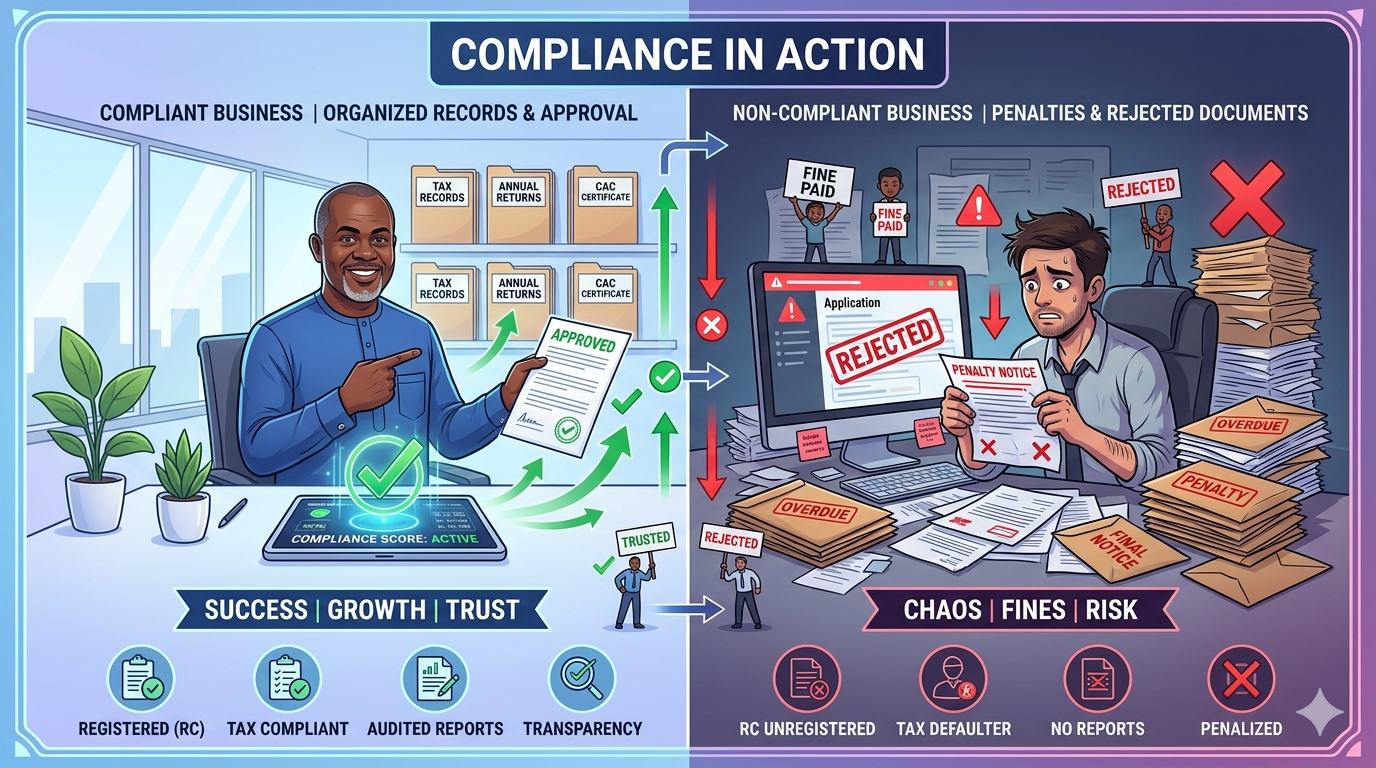
- Financial penalties
- Difficulty accessing loans
- Regulatory complications
- Business reputation issues
- Possible company delisting risks
This guide explains how CAC Annual Return Filing in Nigeria 2027 works, current costs, deadlines, penalties, common mistakes, and how entrepreneurs can build stronger compliance systems for long-term business growth.

What Is CAC Annual Return Filing?
Annual return filing is a mandatory compliance requirement that allows businesses registered with the Corporate Affairs Commission to officially confirm that the company is still operational.
It is not the same as paying tax.
Instead, annual returns provide updated corporate information such as:
- Company status
- Registered address
- Shareholding structure
- Director information
- Operational confirmation
According to the Corporate Affairs Commission (CAC), registered companies are expected to maintain compliance through regular filings and accurate records.
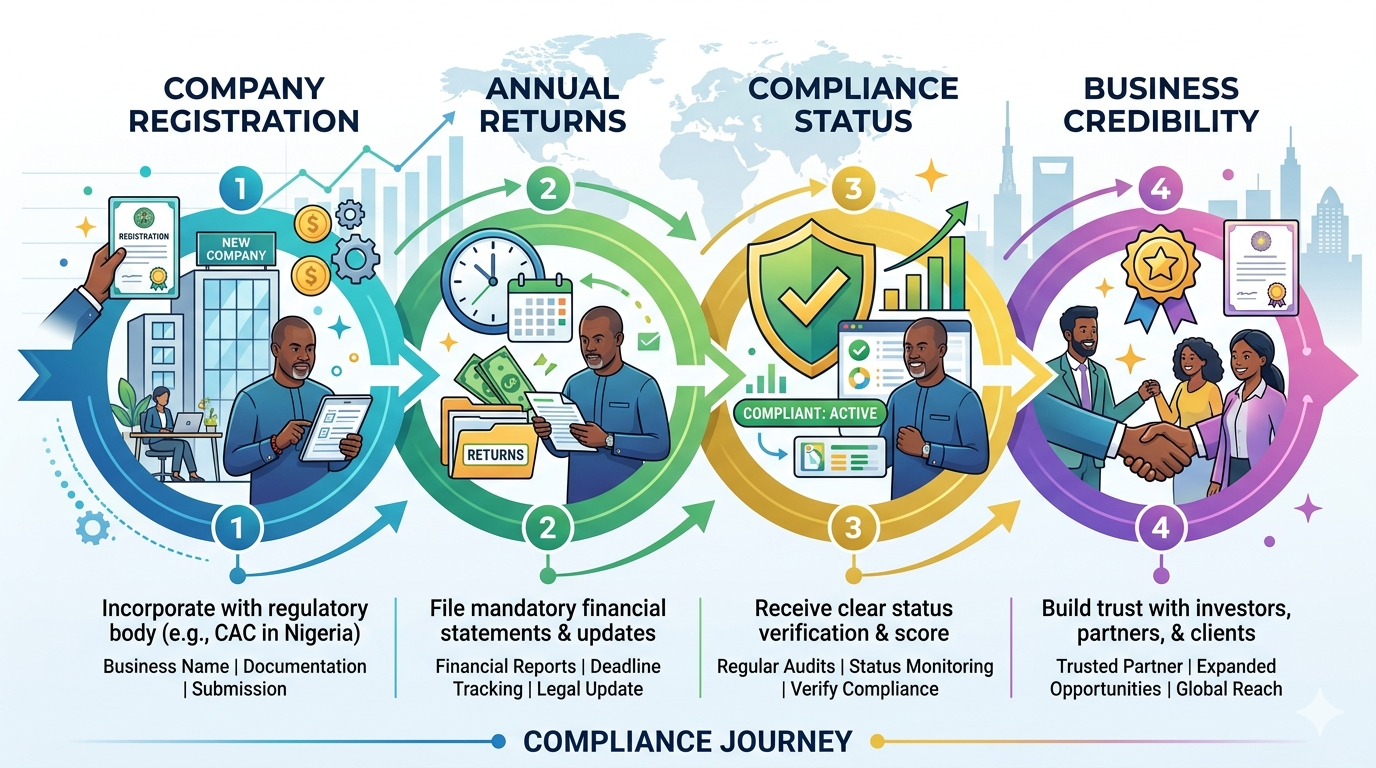
Why CAC Annual Return Filing in Nigeria 2027 Matters More
In previous years, some businesses ignored annual returns for long periods without immediate consequences.
However, CAC Annual Return Filing in Nigeria 2027 is receiving greater attention because Nigeria’s corporate systems are becoming increasingly digitized.
Financial institutions, investors, government agencies, and potential business partners now verify company records more frequently before:
- Approving contracts
- Providing loans
- Entering partnerships
- Processing investments
- Awarding procurement opportunities
Non-compliant businesses may appear inactive or poorly managed.
Who Must File Annual Returns?
Most registered entities operating in Nigeria are expected to file annual returns.
This includes:
- Limited liability companies
- Business names
- NGOs and incorporated trustees
- Partnership structures
Even small businesses with minimal activity are generally expected to remain compliant.
When Should Businesses File?
Timing matters significantly.
For many companies, annual returns are typically filed yearly after the anniversary of incorporation.
Missing deadlines can trigger penalties that increase over time.
Business owners should monitor:
- Registration anniversary dates
- Compliance reminders
- Corporate documentation updates
- Regulatory notices
Maintaining organized compliance records helps businesses avoid unnecessary stress.
Common CAC Annual Return Filing Costs in Nigeria 2027
CAC Annual Return Filing in Nigeria 2027 costs vary depending on the business structure.
Businesses should prepare for:
- Standard filing fees
- Late filing penalties
- Professional service charges
- Documentation update costs
Many entrepreneurs underestimate how quickly penalties can accumulate after multiple years of non-compliance.
This is one reason maintaining annual filing discipline is financially smarter than waiting for penalties to grow.
Why Many Businesses Miss Filing Deadlines
Several common issues contribute to missed compliance deadlines.
1. Entrepreneurs Focus Only on Daily Operations
Many founders become busy handling sales, customer support, logistics, and staffing.
Compliance responsibilities often receive less attention until problems appear.
2. Poor Record Management
Some businesses lack organized systems for tracking corporate obligations.
3. Lack of Compliance Awareness
Some small business owners mistakenly assume annual returns are optional.
4. Frequent Operational Changes
Changes in directors, addresses, or business structure may complicate filing processes if records are outdated.
Why Compliance Improves Business Credibility
Businesses with strong compliance systems often appear more trustworthy to:
- Banks
- Investors
- Suppliers
- Corporate partners
- Government agencies
Compliance demonstrates operational seriousness and long-term commitment.
This is particularly important for businesses seeking:
- Expansion funding
- Procurement contracts
- International partnerships
- Cross-border trade opportunities
Realistic Scenario: Small Logistics Company in Lagos
Consider a realistic example.
A small logistics company in Lagos ignored annual return filings for several years while focusing heavily on operational expansion.
When the company later applied for commercial financing, the bank discovered unresolved compliance issues during verification checks.
The founders had to:
- Resolve accumulated penalties
- Update company records
- Correct documentation inconsistencies
- Rebuild compliance status
The process delayed loan approval significantly.
Situations like this are becoming more common as digital verification systems improve.
Business Registration and Annual Compliance Work Together
Many entrepreneurs complete business registration but fail to understand the long-term compliance responsibilities that follow.
This related guide explains registration costs, hidden fees, and CAC processing timelines: Company Registration Cost in Nigeria (2026): Hidden Fees, CAC Charges & Processing Time.
Registration is only the beginning. Long-term operational compliance matters equally.
Why Accurate Profit Calculations Matter for Compliance
Businesses with poor financial visibility often struggle with compliance because operational planning becomes inconsistent.
Many African businesses underestimate hidden operational costs such as:
- Currency exchange losses
- Logistics costs
- Supplier delays
- Inventory waste
- Administrative overhead
This guide explains how businesses now calculate profitability more accurately: How to Calculate Business Profit in Africa (Including Hidden Costs, FX & Logistics 2026).
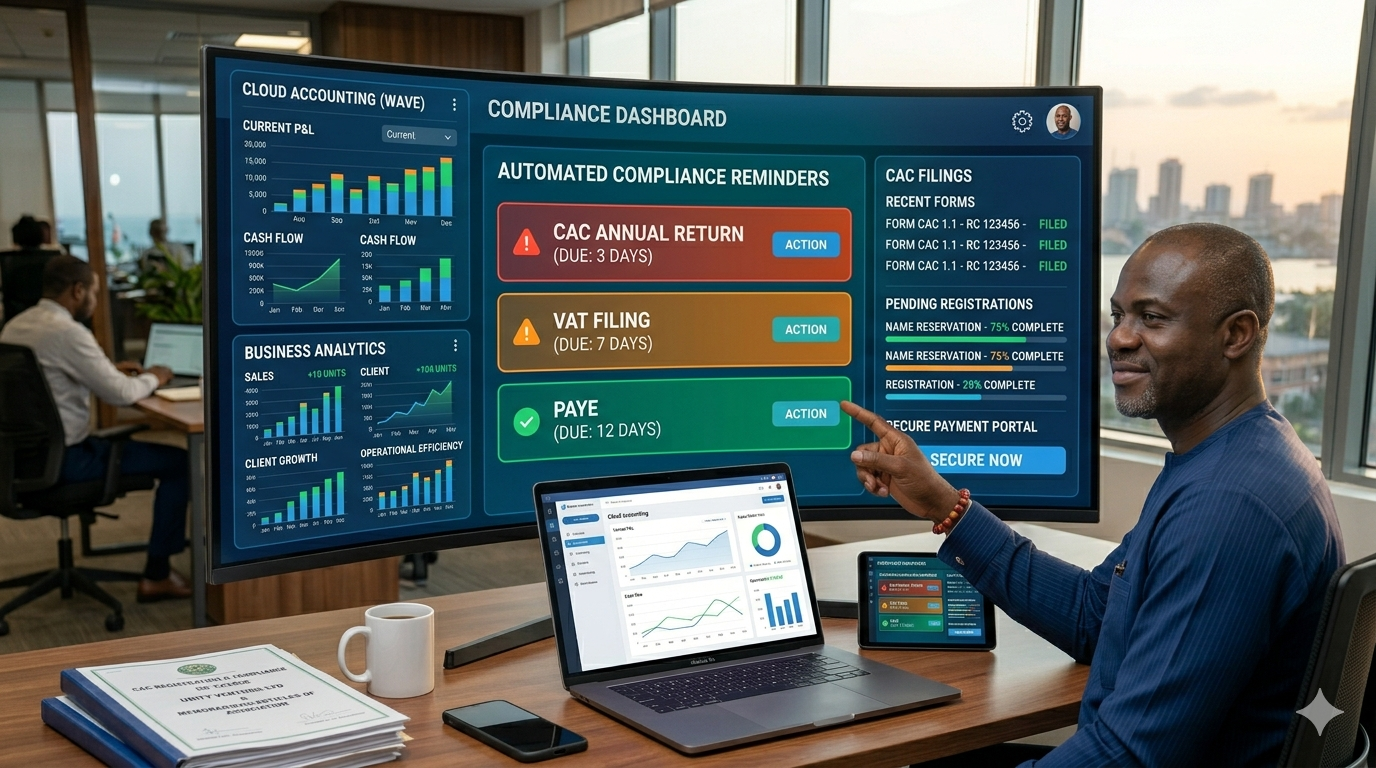
CAC Annual Return Filing in Nigeria 2027 and Digital Transformation
Corporate compliance systems are becoming more digital every year.
Businesses increasingly rely on:
- Digital accounting systems
- Cloud documentation
- Automated reminders
- Online compliance tracking
- AI-powered business management tools
Entrepreneurs who modernize operational systems early often reduce compliance mistakes significantly.
Beginner Online Income vs Long-Term Business Systems
Many entrepreneurs initially enter business through:
- Freelancing
- Affiliate marketing
- Online microtasks
- Social media management
- Content creation
These methods can help beginners develop useful skills and generate limited income.
However, realistic expectations are important. Small online income methods rarely create stable long-term wealth immediately.
Over time, more sustainable growth usually comes from building scalable systems such as:
- Websites and blogs
- YouTube channels
- Mobile applications
- Email audience systems
- Digital media platforms
Some growth-focused teams such as Valspill Team help entrepreneurs build these digital assets properly for long-term monetization and operational stability.
The Growth Path Many Businesses Follow
Long-term business growth often follows this progression:
- Learning Stage — Developing practical skills
- Small Income Stage — Generating early revenue
- System Building Stage — Creating digital infrastructure
- Automation Stage — Improving operational efficiency
- Scaling Stage — Expanding with structured systems
Businesses that build organized systems early often manage compliance more effectively as they grow.
Trademark Protection and Corporate Identity
Compliance is not limited to annual returns alone.
Protecting brand identity also matters for long-term business growth.
Trademark registration helps businesses:
- Reduce brand imitation risks
- Improve legal protection
- Strengthen investor confidence
- Improve market credibility
This guide explains trademark registration processes in Nigeria: Protect Business Name in Nigeria (Trademark Registration Guide 2026/2027).
Insurance and Risk Management Expectations
Modern businesses increasingly require stronger risk management systems.
Operational disruptions can affect:
- Compliance schedules
- Financial stability
- Business continuity
- Corporate reputation
This is why many SMEs now prioritize insurance protection.
This related guide explains SME coverage options: SME Business Insurance in Nigeria (Best Coverage Options in Africa 2026/2027).
Franchise and Licensing Expansion Models
Businesses planning regional expansion often explore:
- Franchise systems
- Licensing structures
- Partnership expansion models
Each model creates different operational and compliance responsibilities.
This guide compares both approaches in African markets: Franchise vs Licensing In Africa: Which Business Model Is More Profitable in 2027?.
Founder Burnout and Compliance Problems
Many entrepreneurs attempt to manage every business responsibility alone.
Over time, this can lead to:
- Missed filing deadlines
- Poor record keeping
- Operational stress
- Decision fatigue
- Compliance mistakes
Automation and AI systems are increasingly helping founders manage repetitive operational tasks more effectively.
This guide explores how AI systems are changing entrepreneurship: Entrepreneur Burnout Solo Founders (Why AI Co-Founders Change Everything in 2026).
Common Mistakes Businesses Should Avoid
1. Ignoring Filing Reminders
Small delays often become larger compliance problems later.
2. Operating Without Organized Records
Proper documentation improves compliance efficiency.
3. Assuming Small Businesses Are Exempt
Many small businesses still have annual filing obligations.
4. Waiting Until Penalties Accumulate
Delayed compliance can become expensive over time.
5. Neglecting Digital Systems
Manual record management often increases compliance errors.
The Future of CAC Annual Return Filing in Nigeria 2027
CAC Annual Return Filing in Nigeria 2027 reflects a broader shift toward improved business transparency, digital corporate systems, and stronger regulatory accountability.
Businesses that build:
- Structured compliance systems
- Accurate financial visibility
- Digital operational tools
- Long-term business planning
will likely manage growth more effectively in the coming years.
Final Thoughts
Many entrepreneurs underestimate how important compliance becomes as businesses grow.
However, CAC Annual Return Filing in Nigeria 2027 is now closely connected to business credibility, operational stability, financial access, and long-term expansion opportunities.
Small online income methods may help beginners learn practical business skills initially, but sustainable long-term growth usually depends on building organized systems, scalable digital assets, and responsible operational structures.
Businesses that prioritize:
- Compliance discipline
- Financial organization
- Digital infrastructure
- Operational efficiency
- Long-term planning
often position themselves more effectively for future opportunities.
If your business is growing in Nigeria, this may be the right time to treat compliance not as a burden — but as part of building a stronger and more sustainable business foundation.
Frequently Asked Questions (FAQ)
What is CAC Annual Return Filing in Nigeria 2027?
It is a mandatory corporate compliance process that confirms a registered business remains operational and maintains updated company records.
Is annual return filing different from tax payment?
Yes. Annual returns are corporate compliance filings, while taxes relate to government revenue obligations.
What happens if a company fails to file annual returns?
Businesses may face financial penalties, compliance complications, reputation issues, and possible delisting risks.
Do small businesses need to file annual returns?
Many registered small businesses are still expected to maintain annual filing compliance.
Why is digital compliance becoming more important?
Digital systems improve transparency, reduce administrative errors, and simplify corporate verification processes.
Can scalable digital businesses improve long-term growth?
Yes. Websites, blogs, YouTube channels, mobile apps, and audience systems often create more sustainable long-term growth opportunities than small temporary online income methods alone.