


In 2026, a Supplier Contract In Nigeria is no longer just a simple document between a buyer and seller. A properly written Supplier Contract In Nigeria has become one of the most important business protection tools for companies trying to survive inflation, delivery delays, unstable supply chains, and growing legal risks.
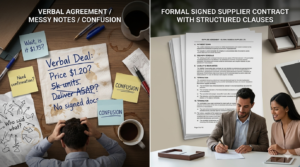
Many Nigerian businesses — especially startups, importers, wholesalers, online stores, manufacturers, and SMEs — still operate with verbal agreements or copied templates downloaded online. Unfortunately, this approach has caused countless payment disputes, inventory shortages, failed partnerships, and avoidable lawsuits.
A strong Supplier Contract In Nigeria helps businesses:
- Protect cash flow
- Prevent supply disruptions
- Reduce legal disputes
- Clarify responsibilities
- Improve long-term partnerships
- Strengthen trust with investors and banks
Whether you run a small fashion business in Lagos, a food distribution company in Port Harcourt, or an online electronics store serving customers across Africa, understanding how a Supplier Contract In Nigeria works is now a necessity — not an option.

What Is a Supplier Contract In Nigeria?
A Supplier Contract In Nigeria is a legally binding agreement between a business and a supplier that outlines the terms of supplying goods or services.
It explains:
- What products will be supplied
- Delivery timelines
- Pricing structure
- Payment conditions
- Quality expectations
- Dispute resolution procedures
- Termination clauses
In Nigeria’s evolving business environment, a Supplier Contract In Nigeria is especially important because of inflation, currency volatility, logistics challenges, and rising import costs.
Without a clear agreement, even trusted suppliers can become major business risks.
Why Supplier Contract In Nigeria Matters More in 2026
The Nigerian business environment has changed significantly in recent years. Businesses now face:
- Fluctuating exchange rates
- Import delays at ports
- Fuel and transportation cost increases
- Supply chain instability
- Higher compliance requirements
- Digital commerce expansion
According to the World Bank and recent reports from the National Bureau of Statistics (NBS), SMEs remain vulnerable to operational disruptions caused by poor business structures and informal agreements.
This is why every modern business now needs a professionally written Supplier Contract In Nigeria to reduce unnecessary operational risks.
Real Example: How One Retail Business Lost Millions Without a Supplier Contract In Nigeria
In early 2025, a Lagos-based electronics retailer relied heavily on a single importer for smartphone accessories. The relationship had existed for nearly two years without any formal Supplier Contract In Nigeria.
When the naira depreciated sharply, the supplier suddenly increased prices by almost 40% and delayed deliveries for weeks. Since there was no signed agreement covering pricing adjustments, delivery timelines, or penalties, the retailer had little protection.
The result?
- Customer complaints increased
- Refund requests grew
- Cash flow collapsed temporarily
- The business lost repeat buyers
After the crisis, the company rebuilt its operations using structured supplier agreements and diversified supplier relationships.
This situation is becoming increasingly common among Nigerian SMEs.
Essential Clauses Every Supplier Contract In Nigeria Must Include
Not all agreements offer equal protection. A weak Supplier Contract In Nigeria can create confusion instead of security.
Here are the most important sections every business should include.
1. Full Business Identification
The agreement should clearly identify:
- Business name
- RC number
- Registered address
- Authorized representatives
- Contact information
This helps avoid disputes involving unofficial representatives or unregistered entities.
If your business is still organizing its compliance structure, you may also find this guide useful:
Business Bank Account Nigeria Documents: The Complete Guide You Must Know in 2026.
2. Product or Service Description
The Supplier Contract In Nigeria must define exactly what is being supplied.
Include:
- Product specifications
- Quality standards
- Brand requirements
- Packaging expectations
- Service deliverables
Vague descriptions create room for misunderstandings.
3. Pricing and Currency Terms
In 2026, this section of a Supplier Contract In Nigeria is extremely important because of currency fluctuations.
Your agreement should explain:
- Unit pricing
- Bulk pricing discounts
- Exchange rate adjustment rules
- VAT responsibilities
- Price review timelines
Many import-dependent businesses now include “currency fluctuation clauses” to reduce unexpected cost shocks.

4. Payment Terms
Clearly state:
- Payment schedule
- Accepted payment methods
- Deposit requirements
- Late payment penalties
- Credit arrangements
This prevents confusion that could damage supplier relationships.
5. Delivery and Logistics Terms
This section should explain:
- Delivery timelines
- Transportation responsibility
- Risk transfer point
- Warehouse obligations
- Inspection procedures
In Nigeria, logistics challenges can significantly affect business operations, especially during fuel price increases or port delays.
6. Quality Control Standards
Your Supplier Contract In Nigeria should specify:
- Inspection rights
- Defective product procedures
- Replacement timelines
- Warranty expectations
- Quality testing methods
This is especially important for food businesses, cosmetics brands, pharmaceuticals, and manufacturing operations.
7. Confidentiality Clause
Many businesses share sensitive information with suppliers, including:
- Customer data
- Pricing strategies
- Manufacturing methods
- Sales projections
- Marketing plans
A confidentiality clause helps protect business information from misuse.
8. Termination Clause
The agreement should explain how either party can legally end the relationship.
Include:
- Notice periods
- Breach conditions
- Compensation rules
- Outstanding payment handling
9. Dispute Resolution Mechanism
Legal disputes can become expensive and time-consuming.
Most modern supplier agreements in Nigeria now include:
- Mediation clauses
- Arbitration agreements
- Jurisdiction selection
- Governing law provisions
This helps businesses resolve conflicts faster without damaging long-term operations.
Common Supplier Contract In Nigeria Mistakes Businesses Still Make
Even growing businesses sometimes ignore important legal protections.
Using Generic Online Templates
Many free templates do not reflect Nigerian commercial realities.
A professional Supplier Contract In Nigeria should consider:
- Local tax laws
- Import restrictions
- Currency risks
- Nigerian court procedures
Ignoring Legal Review
Trying to save money by avoiding professional legal review often creates bigger losses later.
Depending On One Supplier
Overdependence creates operational risk.
Smart businesses now build multiple supplier relationships to improve resilience.
Failing To Define Penalties
If late delivery or poor quality has no consequence, suppliers may not prioritize your business.
How Supplier Contract In Nigeria Supports Business Growth
A professionally structured Supplier Contract In Nigeria does more than reduce risk.
It also helps businesses scale more professionally.
For example, investors and financial institutions often review supplier stability before funding expansion projects.
Businesses with organized agreements usually appear more credible and investment-ready.
This connects directly with broader funding opportunities discussed in:
7 Hidden Ways Family Office Funding in Nigeria Helps Entrepreneurs Raise Capital Without Banks.
Digital Business Growth Is Increasing The Importance of Supplier Contract In Nigeria
As more Nigerian businesses move online, supplier reliability becomes even more critical.
An e-commerce store with poor supplier coordination can quickly face:
- Negative reviews
- Cancelled orders
- Refund pressure
- Advertising losses
- Customer distrust
Businesses transitioning into digital commerce often discover that operational systems matter as much as marketing.
You can see this transformation discussed here:
WhatsApp to E-Commerce Store: What Happened When I Moved My Small Business Online In 2026.

Supplier Contract In Nigeria and Tax Planning
Many business owners overlook the tax implications connected to a Supplier Contract In Nigeria.
Well-structured agreements can help businesses:
- Track deductible expenses properly
- Improve financial transparency
- Strengthen audit readiness
- Reduce compliance issues
Business structure also affects how contracts and taxation work together.
For deeper insight, read:
Best Business Structure for Tax in Africa (2027 Tax Savings Strategy Guide).
Beginner Entrepreneurs Often Underestimate Operational Systems
Many new entrepreneurs focus only on making quick sales.
However, sustainable businesses are built on systems.
A strong Supplier Contract In Nigeria is part of those systems.
Early-stage hustles and small online income methods can help people start learning business fundamentals, but long-term growth usually comes from building structured digital assets such as:
- Websites and blogs
- E-commerce platforms
- YouTube channels
- Mobile applications
- Digital media brands
The businesses that scale successfully often combine:
- Reliable operations
- Strong contracts
- Traffic generation
- Content marketing
- Financial systems
This progression matters because many African startups struggle not from lack of ideas, but from weak operational foundations.
That challenge is explored further here:
Why Bootstrapped Startup Failure in Africa Is Getting Worse Before Profit (2026 Survival Guide).
How Smart Businesses Use Supplier Contract In Nigeria To Scale
Consider a realistic example.
A small skincare brand in Abuja started by selling products through WhatsApp and Instagram.
Initially, the founder relied on informal supplier relationships without a proper Supplier Contract In Nigeria.
As sales increased, inventory inconsistencies became a major problem.
The business then implemented:
- Formal supply agreements
- Inventory tracking systems
- Backup suppliers
- Delivery performance metrics
Within one year, the company expanded into nationwide shipping and launched its own e-commerce website.
The difference was not just marketing — it was operational structure.

FAQ: Supplier Contract In Nigeria
Is a Supplier Contract In Nigeria legally enforceable?
Yes. A properly written and signed Supplier Contract In Nigeria is legally enforceable under Nigerian commercial law.
Can small businesses create supplier contracts without lawyers?
Yes, but legal review is strongly recommended for important agreements involving large payments, imports, manufacturing, or long-term partnerships.
How long should a supplier agreement last?
It depends on the business relationship. Many agreements last between 6 months and 3 years with renewal options.
Should Nigerian businesses include exchange rate clauses?
Yes. Because of currency fluctuations, many businesses now include pricing adjustment clauses tied to exchange rate movements.
Final Thoughts
A Supplier Contract In Nigeria is not just paperwork. It is part of the foundation that protects and grows a business.
In 2026, businesses that rely only on trust and informal agreements face increasing operational risks. Smart entrepreneurs are building stronger systems, improving documentation, and creating scalable structures that can survive market uncertainty.
Small online hustles and early business experiments can be valuable starting points. However, long-term income stability usually comes from building structured assets and reliable business operations.
That includes:
- Professional contracts
- Strong supplier relationships
- Digital platforms
- Traffic-generating content
- Scalable business systems
Many entrepreneurs eventually realize that sustainable growth depends less on shortcuts and more on building organized, dependable foundations over time.
The Valspill team continues helping businesses understand how to build those systems properly for long-term revenue and operational stability.
If you found this guide useful, consider sharing it with another entrepreneur or leaving a comment about the biggest supplier challenge your business has faced recently.