

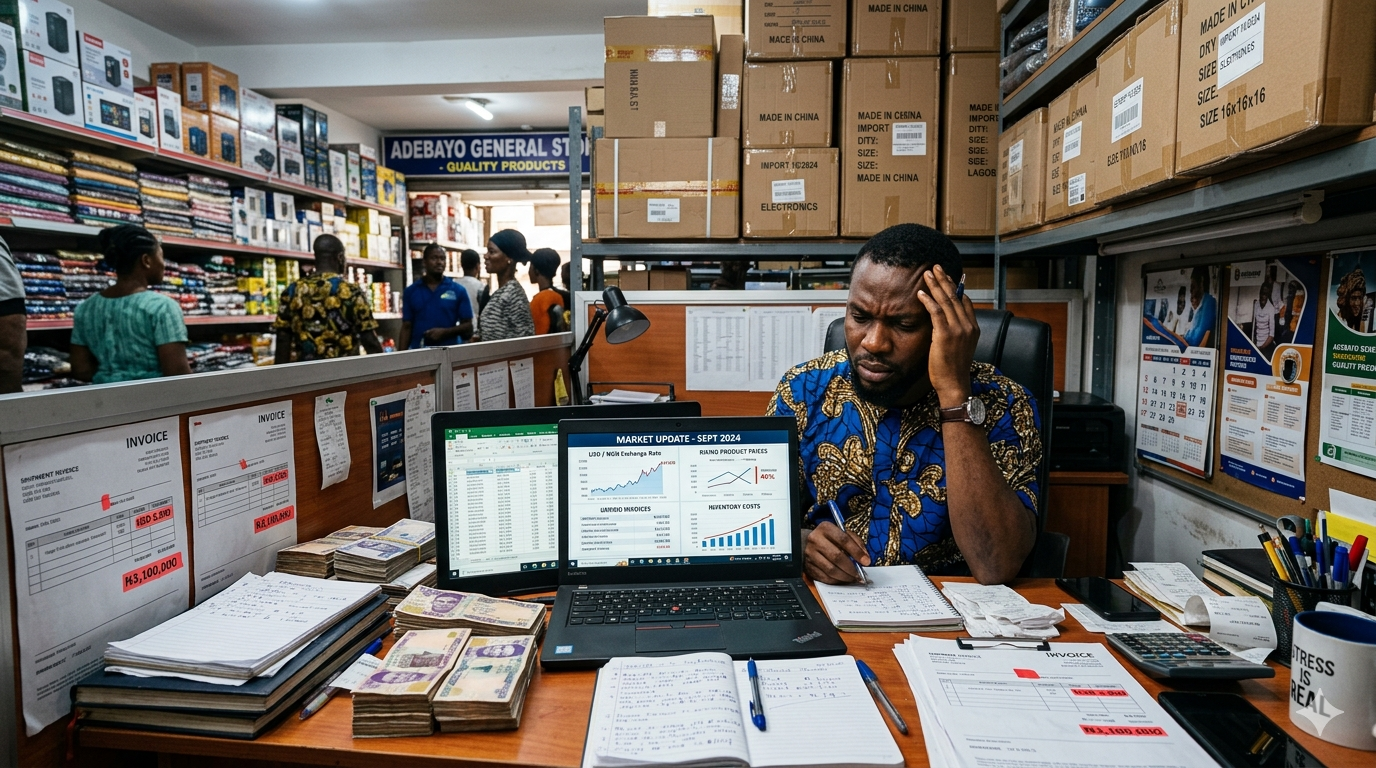
The naira crisis changed the way many Nigerian businesses operate, price products, manage inventory, and plan for survival.
For thousands of entrepreneurs, dollar pricing in Nigeria became one of the biggest business realities of the past few years.
From importers and manufacturers to tech startups, online vendors, logistics companies, and even small retailers, businesses across Nigeria experienced rising costs as the naira weakened against the US dollar.
Many companies struggled to maintain profitability because:
- Imported goods became more expensive
- Supplier costs changed rapidly
- Pricing stability disappeared
- Consumer purchasing power declined
- Operating expenses increased sharply
Some businesses adapted successfully. Others reduced operations, increased prices aggressively, or shut down completely.
Understanding what happened during the naira crisis provides important lessons for Nigerian entrepreneurs entering 2027.
Businesses that survive long term usually develop stronger financial discipline, flexible pricing systems, scalable operations, and diversified revenue strategies.
What Caused the Dollar Pricing Crisis in Nigeria?
Several economic factors contributed to the rapid increase in dollar pricing in Nigeria.
Key factors included:
- Foreign exchange shortages
- Exchange rate volatility
- High inflation
- Reduced foreign reserves
- Import dependency
- Global supply chain disruptions
According to Central Bank of Nigeria (CBN) and International Monetary Fund (IMF), currency instability significantly affected businesses dependent on imports and international transactions.
Because Nigeria imports many raw materials, machinery, electronics, software services, and manufacturing inputs, the rising dollar exchange rate directly increased operational costs for many businesses.
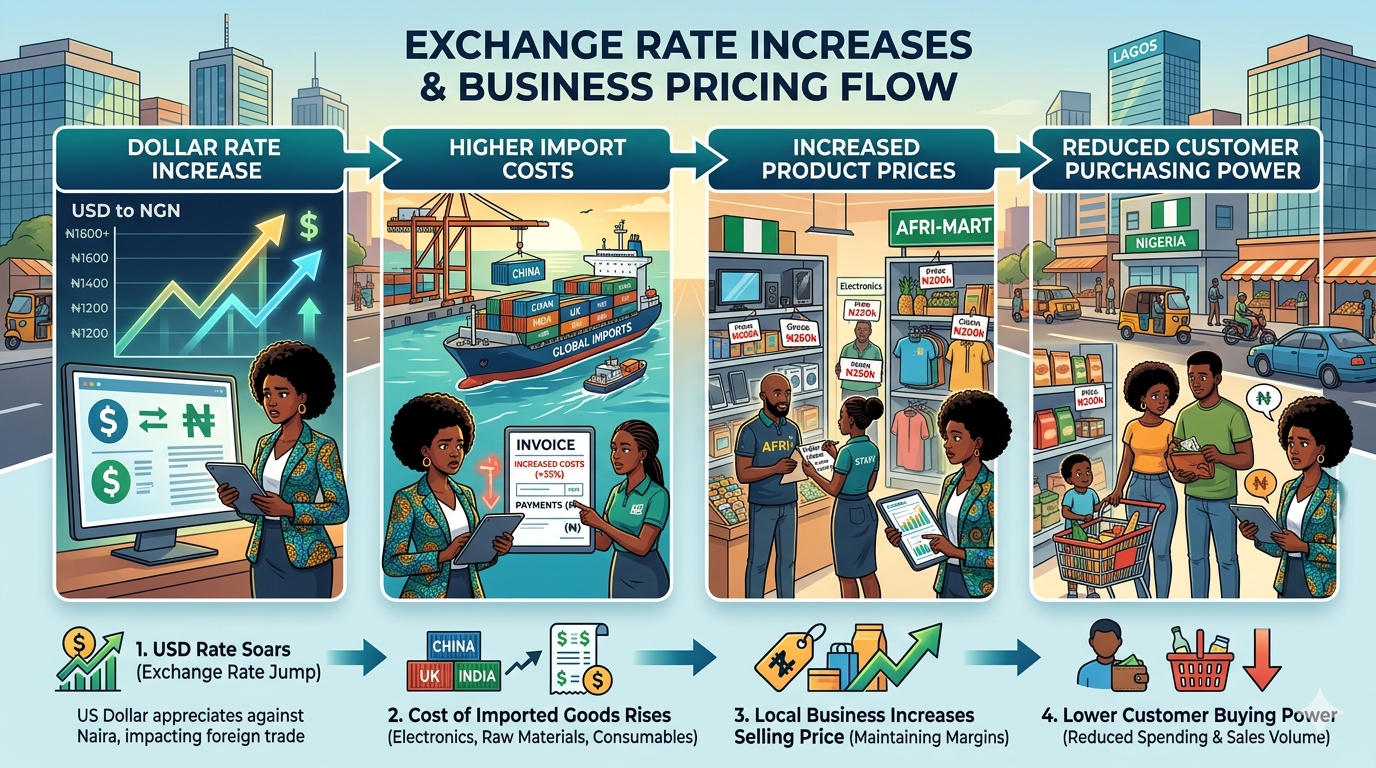
How Dollar Pricing in Nigeria Affected Small Businesses
Small and medium-sized businesses were among the hardest hit during the naira crisis.
Unlike large corporations, many SMEs lacked:
- Strong financial reserves
- Foreign currency protection
- Long-term supplier agreements
- Stable operational systems
As exchange rates changed rapidly, many businesses struggled to maintain stable pricing.
Example Scenario
A small electronics retailer in Lagos imported phone accessories using dollar payments.
Before the currency crisis:
- A product cost ₦8,000 landed
- The business sold it for ₦12,000
After exchange rate increases:
- The same product cost ₦16,000 landed
- Customers resisted higher prices
- Sales volume dropped
The business owner faced a difficult decision:
- Increase prices and risk losing customers
- Maintain prices and reduce profit margins
This became a common challenge during the period of intense dollar pricing in Nigeria.
Industries Most Affected by Dollar Pricing in Nigeria
1. Import Businesses
Import-dependent businesses experienced major cost increases because products purchased internationally became more expensive immediately.
Affected sectors included:
- Electronics
- Fashion retail
- Automobile parts
- Medical supplies
- Beauty products
- Industrial equipment
2. Manufacturing Companies
Many Nigerian manufacturers rely on imported raw materials and machinery.
As dollar exchange rates increased, production costs also rose sharply.
Some businesses responded by:
- Reducing production
- Increasing prices gradually
- Seeking local alternatives
- Cutting operational expenses
3. Technology Startups
Many Nigerian tech companies pay for:
- Cloud hosting
- Software subscriptions
- Advertising tools
- Developer services
- International APIs
Most of these services are billed in dollars.
This made operational costs unpredictable for startups operating with naira revenue.
Some startups failed because their business models were not scalable enough during economic pressure: Startup Accelerator Failure In Africa 2027 (Why Funded Startups Still Collapse).
How Businesses Responded to Dollar Pricing in Nigeria
Businesses used different survival strategies during the naira crisis.
1. Frequent Price Adjustments
Some companies adjusted prices weekly or even daily because supplier costs changed rapidly.
This created customer frustration but became necessary for survival.
2. Reducing Imported Inventory
Some businesses reduced dependence on imported products and focused more on locally sourced alternatives.
This helped reduce foreign exchange exposure.
3. Smaller Packaging and Product Sizes
Many FMCG companies introduced:
- Smaller product units
- Budget packaging
- Lower-cost alternatives
This strategy helped consumers continue purchasing products despite rising prices.
4. Digital Transformation
Some businesses accelerated digital operations to reduce operational costs.
This included:
- Online sales systems
- Remote operations
- Digital marketing
- Automated customer service
Businesses with scalable systems generally adapted better during economic uncertainty.
The Biggest Lesson From Dollar Pricing in Nigeria
One major lesson became very clear:
Businesses cannot rely entirely on unstable economic conditions remaining favorable forever.
Companies that survived usually had:
- Strong financial management
- Flexible operations
- Diverse income sources
- Digital systems
- Adaptive pricing strategies
This is why scalability matters significantly: Scalable Business Definition Investors 2026: Why Most Startups Fail Scalability Tests Before Profit.
How Product Pricing Became More Difficult
Pricing products became extremely challenging during the crisis period.
Many business owners struggled because:
- Supplier prices changed rapidly
- Customer purchasing power weakened
- Competitors adjusted prices differently
- Inventory replacement costs became unpredictable
Some entrepreneurs priced products too low and lost money unknowingly.
Others increased prices too aggressively and lost customers.
This is why strategic pricing became essential: Product Pricing Strategy In Africa (How to Stay Profitable in 2027 Competitive Markets).

Realistic Case Study: Fashion Retailer in Abuja
Consider a realistic example.
A fashion retailer in Abuja imported clothing from Turkey and China.
Before the naira crisis:
- Inventory costs remained relatively stable
- Profit margins averaged 35%
- Customers purchased consistently
As exchange rates increased sharply:
- Import costs nearly doubled
- Shipping expenses increased
- Customer demand slowed
- Profit margins declined heavily
Instead of shutting down, the entrepreneur adapted by:
- Introducing locally produced fashion items
- Expanding online marketing
- Reducing unnecessary operational expenses
- Launching a simple e-commerce website
Within a year, the business stabilized gradually.
This highlights how adaptability often determines survival during economic uncertainty.
Why Digital Businesses Adapted Faster
Many digital businesses handled the naira crisis better because they operated with:
- Lower physical overhead
- Flexible operational structures
- Scalable digital systems
- Online customer acquisition
Examples include:
- Content creators
- Affiliate marketers
- Website publishers
- Online educators
- Software developers
However, realistic expectations remain important.
Most beginner online income methods generate limited earnings initially.
For many people, side hustles and small online tasks serve mainly as:
- Learning opportunities
- Skill development platforms
- Entry points into digital business
Sustainable income usually comes from building scalable digital assets such as:
- Websites and blogs
- YouTube channels
- Mobile applications
- E-commerce platforms
- Educational platforms
The growth path often looks like this:
Beginner Online Work → Learning Skills → Building Digital Assets → Growing Traffic → Scaling Revenue
For example, a Nigerian content creator may initially earn small affiliate commissions before eventually building a high-traffic website generating advertising and sponsorship income consistently.
Teams like Valspill increasingly help entrepreneurs build scalable digital systems correctly for monetization and long-term sustainability.
How Nigerian Consumers Changed During the Crisis
Consumers also changed their buying behavior significantly.
Many people became:
- More price-sensitive
- More cautious with spending
- Focused on essential purchases
- More interested in value
Businesses that communicated value clearly generally retained customers more successfully.
Why Financial Discipline Became More Important
The crisis exposed weak financial management in many companies.
Businesses that survived usually:
- Tracked expenses carefully
- Managed cash flow properly
- Reduced unnecessary spending
- Reviewed financial reports consistently
- Maintained flexible operations
Entrepreneurs planning long-term growth should also understand: Smart Full-Time Business Ownership in Nigeria (2027 Guide to Leaving Salary Employment Safely).
Business Compliance Still Matters
Even during economic difficulty, businesses still need proper:
- CAC filings
- Tax compliance
- Corporate records
- Operational documentation
Business owners should also review: Essential CAC Annual Return Filing in Nigeria 2027: Costs, Penalties, Deadlines and Compliance Guide.
Understanding Nigerian Business Culture During Economic Pressure
The naira crisis also reinforced how important trust and relationships remain in Nigerian business culture.
Businesses that communicated honestly with customers often maintained stronger loyalty.
Foreign investors and entrepreneurs should understand these local realities carefully: Nigerian Business Culture in 2026/2027: 23 Rules Foreign Investors Must Understand Before Signing Deals.
Lessons Businesses Should Remember in 2027
- Do not depend heavily on unstable exchange conditions
- Build flexible pricing systems
- Diversify revenue sources
- Invest in digital infrastructure
- Control operational expenses carefully
- Develop scalable business systems
- Maintain financial discipline consistently

Conclusion
The period of intense dollar pricing in Nigeria created one of the most difficult business environments many entrepreneurs had ever experienced.
While some businesses struggled heavily, others adapted by improving:
- Financial management
- Operational flexibility
- Pricing systems
- Digital transformation
- Scalable revenue models
The biggest lesson from the naira crisis is that sustainable businesses must prepare for uncertainty rather than depend on stable economic conditions permanently.
Small online income opportunities may help entrepreneurs begin their journeys, but long-term financial growth usually comes from building scalable digital assets and sustainable systems over time.
Businesses entering 2027 successfully are increasingly focusing on:
- Digital scalability
- Financial discipline
- Customer trust
- Operational flexibility
- Long-term sustainability
For entrepreneurs willing to adapt, learn, and build stronger systems, the lessons from the naira crisis may ultimately create more resilient businesses in the future.
Frequently Asked Questions (FAQ)
What caused dollar pricing in Nigeria?
Dollar pricing increased mainly because of exchange rate instability, inflation, foreign exchange shortages, and Nigeria’s dependence on imports.
How did dollar pricing affect Nigerian businesses?
Many businesses experienced higher operational costs, reduced profit margins, unstable pricing, and lower customer purchasing power.
Which businesses suffered most during the naira crisis?
Importers, manufacturers, technology startups, and businesses dependent on foreign suppliers were among the most affected.
How did some businesses survive the crisis?
Businesses that adapted successfully often improved pricing systems, reduced costs, diversified revenue, and expanded digital operations.
Why are scalable digital businesses becoming more important?
Digital businesses often have lower operational costs, greater flexibility, and better scalability during economic uncertainty.
What lessons should entrepreneurs remember in 2027?
Entrepreneurs should focus on financial discipline, operational flexibility, scalable systems, and long-term sustainability rather than short-term growth alone.