

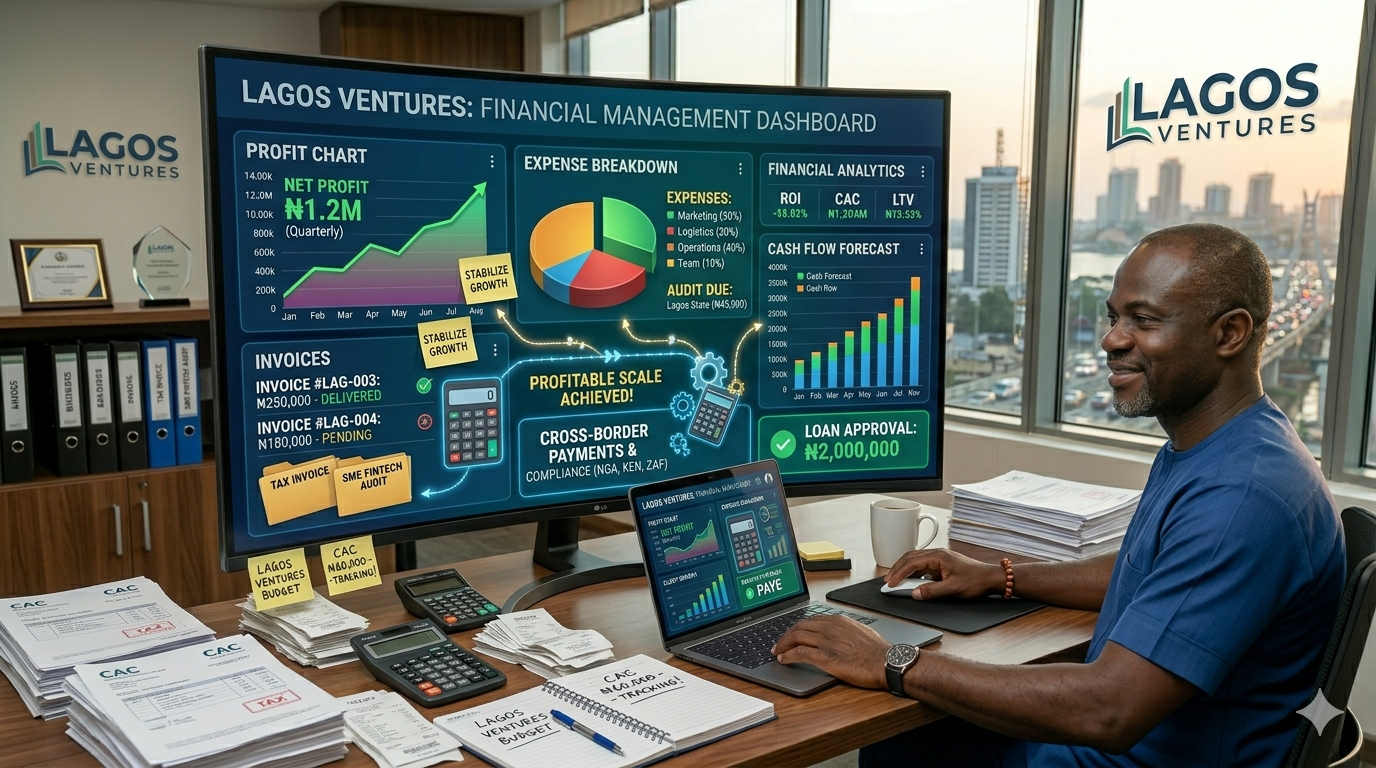
Understanding a profit and loss statement for Nigerian business owners has become more important than ever in 2027.
Many entrepreneurs work extremely hard, generate sales consistently, and attract customers daily, yet still struggle financially because they do not fully understand their business numbers.
A business may look successful publicly while secretly losing money every month.
That is why learning how to read a profit and loss statement for Nigerian business operations can help entrepreneurs make smarter financial decisions, avoid hidden losses, and improve long-term sustainability.
Whether you run a supermarket in Port Harcourt, an online fashion brand in Lagos, a restaurant in Abuja, or a logistics company in Enugu, your financial reports tell the real story of your business performance.
A proper understanding of a profit and loss statement for Nigerian business owners allows entrepreneurs to:
- Track profitability accurately
- Monitor operational expenses
- Identify financial leaks early
- Improve pricing decisions
- Prepare for investors and lenders
- Scale more sustainably
In today’s economy, businesses that understand their numbers clearly often outperform businesses that rely only on intuition.
What Is a Profit and Loss Statement for Nigerian Business Owners?
A profit and loss statement for Nigerian business owners is a financial report showing:
- Total revenue
- Business expenses
- Operational costs
- Net profit or losses
It summarizes how much money a business earns and spends over a specific period.
Most businesses review profit and loss statements:
- Monthly
- Quarterly
- Annually
However, because economic conditions change rapidly in Nigeria, many financial experts now recommend monthly reviews.
According to World Bank and PwC Nigeria, poor financial management continues to contribute heavily to SME failure across developing economies.
Why Every Entrepreneur Must Understand a Profit and Loss Statement for Nigerian Business Growth
Many entrepreneurs completely rely on accountants without understanding their financial reports personally.
That approach creates unnecessary risk.
You do not need to become an accountant to understand a profit and loss statement for Nigerian business operations.
However, you should understand the core financial indicators affecting your company.
Business owners who review their financial reports regularly are usually better prepared to:
- Control operational waste
- Improve profitability
- Handle inflation pressure
- Prepare for economic uncertainty
- Expand responsibly
Businesses seeking loans should also understand what lenders evaluate financially: Successful Business Plan for Bank Loan in Nigeria (What CBN Licensed Banks Expect in 2026).

Main Sections of a Profit and Loss Statement for Nigerian Business Owners
Every profit and loss statement for Nigerian business owners contains several important sections.
1. Revenue
Revenue represents total business income before expenses are deducted.
Examples include:
- Product sales
- Service income
- Subscription payments
- Delivery fees
Revenue is commonly called the “top line” because it appears at the top of the report.
Example
A Lagos fashion business generates:
- ₦7 million from physical sales
- ₦3 million from online orders
Total monthly revenue becomes ₦10 million.
However, revenue alone does not reveal financial health.
2. Cost of Goods Sold (COGS)
COGS refers to direct costs associated with producing or delivering products and services.
Examples include:
- Raw materials
- Inventory purchases
- Manufacturing expenses
- Packaging costs
- Production labor
For many Nigerian businesses in 2027, rising fuel prices and imported material costs continue affecting production expenses significantly.
Example
The same fashion business spends:
- ₦4 million on fabrics
- ₦1 million on tailoring
- ₦500,000 on packaging
Total COGS becomes ₦5.5 million.
3. Gross Profit
Gross profit shows how much revenue remains after subtracting direct production costs.
Formula:
Gross Profit = Revenue – Cost of Goods Sold
In this example:
₦10 million – ₦5.5 million = ₦4.5 million gross profit
A healthy gross profit margin often indicates stronger pricing systems and operational efficiency.
Businesses struggling with profitability may also benefit from: Product Pricing Strategy In Africa (How to Stay Profitable in 2027 Competitive Markets).
4. Operating Expenses
Operating expenses represent daily business running costs.
Examples include:
- Rent
- Staff salaries
- Internet subscriptions
- Transportation costs
- Marketing expenses
- Electricity bills
- Office maintenance
In 2027, many Nigerian businesses continue facing higher operational costs because of:
- Inflation
- Fuel price increases
- Foreign exchange pressure
- Supply chain disruptions
A detailed profit and loss statement for Nigerian business owners helps track these rising expenses carefully.
5. Net Profit
Net profit represents the final amount remaining after all expenses are deducted.
This is the real profit the business actually keeps.
Formula:
Net Profit = Gross Profit – Operating Expenses – Taxes – Other Costs
Many businesses generate strong revenue while struggling with weak net profit margins.
This is why understanding a profit and loss statement for Nigerian business growth is extremely important.
How to Analyze a Profit and Loss Statement Properly
1. Compare Monthly Financial Trends
Never analyze financial reports in isolation.
Compare:
- This month vs previous month
- This quarter vs last quarter
- This year vs previous year
Trend analysis helps businesses detect problems earlier.
2. Monitor Expense Growth Carefully
One major problem many businesses face is allowing expenses to increase faster than revenue.
For example:
- Revenue increases by 20%
- Expenses increase by 45%
Profitability eventually declines despite higher sales.
3. Watch Gross Profit Margins
Declining gross profit margins may indicate:
- Weak pricing strategies
- Supplier cost increases
- Operational inefficiencies
- Discounting problems
Business owners should also understand financial ratios alongside profit statements: Financial Ratios Every Nigerian Business Owner Must Review Monthly in 2027 and What They Mean.
4. Separate Personal and Business Spending
Many SMEs still mix personal expenses with company finances.
This creates inaccurate financial reporting and makes business analysis difficult.
Strong accounting discipline improves clarity significantly.

Realistic Case Study: Restaurant Business in Abuja
Consider a practical example.
An Abuja restaurant records monthly revenue of ₦15 million.
Initially, the owner assumes the business is highly profitable.
However, after reviewing the profit and loss statement for Nigerian business performance carefully, several issues appear:
- Food wastage increased
- Fuel expenses doubled
- Delivery logistics became expensive
- Overtime staff payments rose significantly
Although revenue remained strong, net profits declined steadily.
After identifying the problem areas, the business owner:
- Improved inventory control
- Adjusted menu pricing
- Reduced operational waste
- Optimized delivery routes
Profitability improved within several months.
This demonstrates why monthly financial reviews matter.
Regular financial analysis helps businesses identify hidden operational problems.
Why Investors Review Profit and Loss Statements
Investors and lenders carefully examine financial reports before approving:
- Business loans
- Startup investments
- Partnerships
- Expansion funding
Companies with weak financial reporting often struggle to secure serious funding opportunities.
This explains why many funded startups still collapse despite receiving investment: Startup Accelerator Failure In Africa 2027 (Why Funded Startups Still Collapse).
Online Businesses and Realistic Income Expectations
Many Nigerians now explore online business opportunities and side hustles.
Common examples include:
- Affiliate marketing
- Freelancing
- Social media management
- Online selling
- Content creation
However, it is important to remain realistic.
Most beginner online income methods generate modest earnings initially.
They are useful as learning opportunities rather than guaranteed long-term financial solutions.
Entrepreneurs who eventually build sustainable income often transition toward scalable digital systems such as:
- Websites and blogs
- YouTube channels
- E-commerce stores
- Educational platforms
- Mobile apps
The growth journey often looks like this:
Small Online Tasks → Skill Development → Building Digital Assets → Growing Traffic → Scaling Revenue
For example, a Nigerian freelancer may initially earn small project income before eventually building a content website generating advertising and affiliate revenue consistently.
Teams like Valspill increasingly help entrepreneurs develop scalable digital assets properly for monetization and sustainable long-term growth.
Business Compliance Still Matters
Profitability alone is not enough for sustainable business success.
Businesses must also maintain proper:
- CAC filings
- Tax records
- Corporate documentation
- Regulatory compliance
Business owners should also review: Essential CAC Annual Return Filing in Nigeria 2027: Costs, Penalties, Deadlines and Compliance Guide.
Understanding Nigerian Business Culture
Business success in Nigeria also depends heavily on:
- Trust-building
- Negotiation skills
- Relationship management
- Operational understanding
Entrepreneurs and foreign investors should understand these business realities carefully: Nigerian Business Culture in 2026/2027: 23 Rules Foreign Investors Must Understand Before Signing Deals.
Common Financial Mistakes Nigerian Businesses Make
- Ignoring monthly financial reviews
- Tracking sales without monitoring profit
- Mixing business and personal spending
- Failing to monitor operational costs
- Expanding too aggressively
- Neglecting proper bookkeeping systems
Simple Monthly Financial Review Checklist
Every month, business owners should review:
- Total revenue
- Cost of goods sold
- Gross profit margins
- Operational expenses
- Net profit performance
- Cash flow trends
- Inventory movement
- Outstanding debts
Consistent financial reviews often separate sustainable businesses from unstable ones.

Conclusion
Learning how to understand a profit and loss statement for Nigerian business owners is one of the most valuable financial skills entrepreneurs can develop in 2027.
A proper financial analysis system helps businesses:
- Improve profitability
- Reduce waste
- Manage risk better
- Scale more sustainably
- Prepare for investors and lenders
Small online income opportunities may help entrepreneurs begin their journey, but long-term financial growth usually comes from building scalable systems and sustainable digital assets over time.
The businesses most likely to succeed in the future will combine:
- Financial discipline
- Strong operational systems
- Digital scalability
- Consistent learning
- Long-term strategic thinking
If you want your company to grow sustainably in 2027 and beyond, start by understanding your numbers properly.
Your financial reports may reveal important opportunities and hidden risks you have not noticed before.
Frequently Asked Questions (FAQ)
What is a profit and loss statement for Nigerian business owners?
It is a financial report showing revenue, expenses, costs, and net profit over a specific period.
Why is a profit and loss statement important?
It helps entrepreneurs understand profitability, control expenses, and make smarter financial decisions.
How often should businesses review profit and loss statements?
Monthly reviews are highly recommended for better financial monitoring and decision-making.
Can small businesses use profit and loss statements?
Yes. Small businesses benefit significantly from financial tracking and monthly performance analysis.
Do banks review profit and loss statements before approving loans?
Yes. Financial reports are important when evaluating loan applications and investment opportunities.
What is the difference between revenue and profit?
Revenue is total income from sales, while profit is the amount remaining after expenses are deducted.