


This detailed guide explains practical valuation methods, investor expectations, modern scalability factors, and how digital business systems are changing business valuation across Nigeria and Africa.
Why Entrepreneurs Need to Value a Small Business in Nigeria Properly
Many founders only think about valuation when they want to sell their businesses.
In reality, the ability to Value a Small Business in Nigeria accurately affects several major business decisions:
- Investor negotiations
- Bank loan approvals
- Business partnerships
- Equity sharing
- Expansion planning
- Mergers and acquisitions
- Succession strategies
Strong valuation also helps entrepreneurs understand the real financial strength of their companies.
Without proper valuation, many businesses become overpriced during negotiations or undervalued during investment discussions.
Why Comparable Sales Data Is Rare in Nigeria
One major reason entrepreneurs struggle to Value a Small Business in Nigeria is the lack of transparent market transaction data.
In advanced startup ecosystems, investors may use comparable company sales to estimate business value.
For example:
- Restaurants may sell using revenue multiples
- Software startups may use ARR multiples
- E-commerce brands may use EBITDA formulas
However, Nigeria’s SME environment presents different realities:
- Most business acquisitions remain private
- Financial reporting standards vary widely
- Many SMEs operate informally
- Public acquisition databases are limited
- Tax reporting may not reflect actual cash flow
As a result, entrepreneurs and investors often rely on customized valuation approaches.
Cash Flow Often Matters More Than Revenue
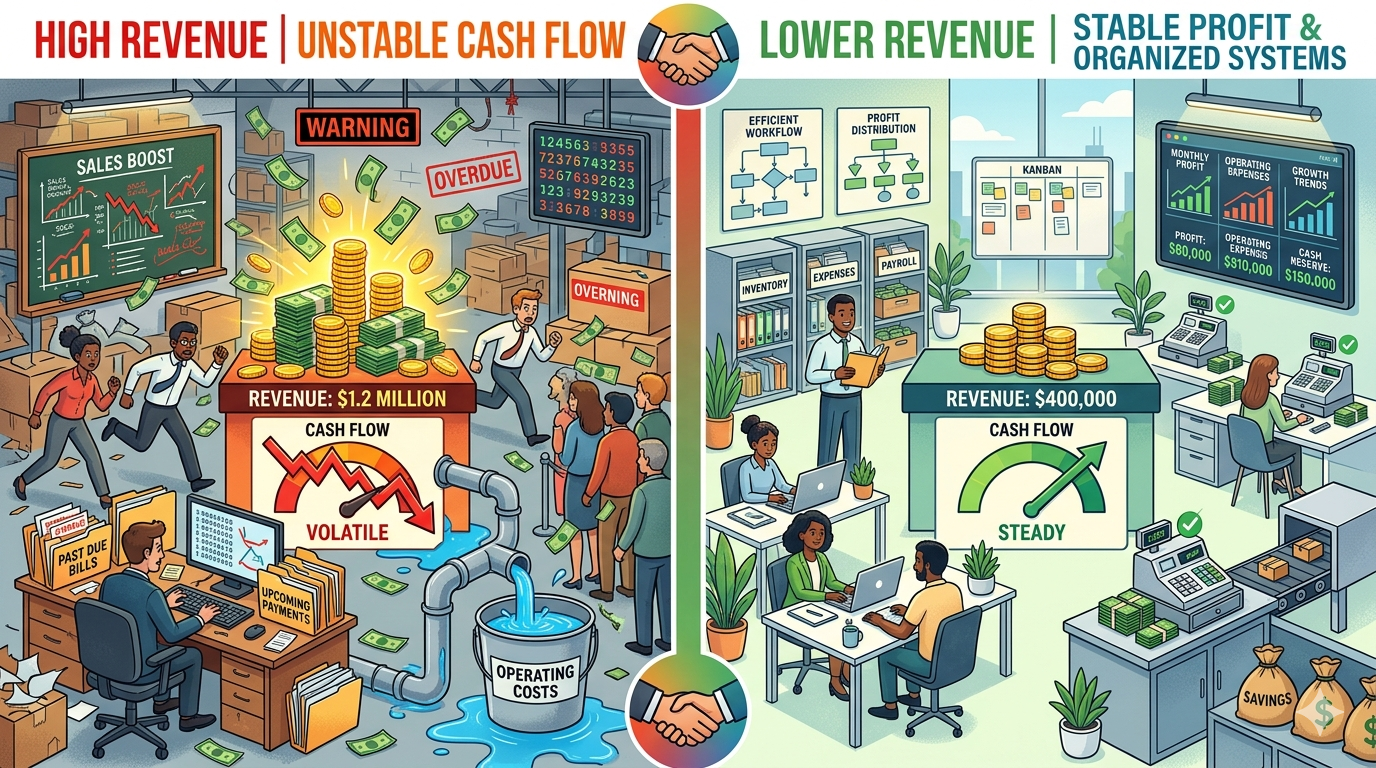
Many founders believe higher revenue automatically increases business value.
That assumption is not always accurate.
When investors Value a Small Business in Nigeria, predictable cash flow often matters more than raw sales numbers.
A business earning ₦15 million in stable annual profit may attract more investor confidence than another company generating ₦100 million revenue with unstable margins.
This becomes especially important in Nigeria where:
- Inflation affects operating costs
- Foreign exchange rates fluctuate regularly
- Fuel and logistics costs change frequently
- Power expenses impact profitability
Understanding hidden operating expenses is critical for proper valuation. This guide explains how profitability calculations work in African markets: How to Calculate Business Profit in Africa (Including Hidden Costs, FX & Logistics 2026).
How Investors Value a Small Business in Nigeria in 2027
Modern investors rarely rely on emotional assumptions.
Instead, they focus on measurable business fundamentals.
When investors Value a Small Business in Nigeria, they often evaluate:
- Revenue consistency
- Cash flow stability
- Operational systems
- Customer retention
- Founder dependency
- Digital infrastructure
- Scalability potential
- Compliance structure
- Market positioning
Businesses with repeatable systems and recurring customers usually receive stronger valuations.
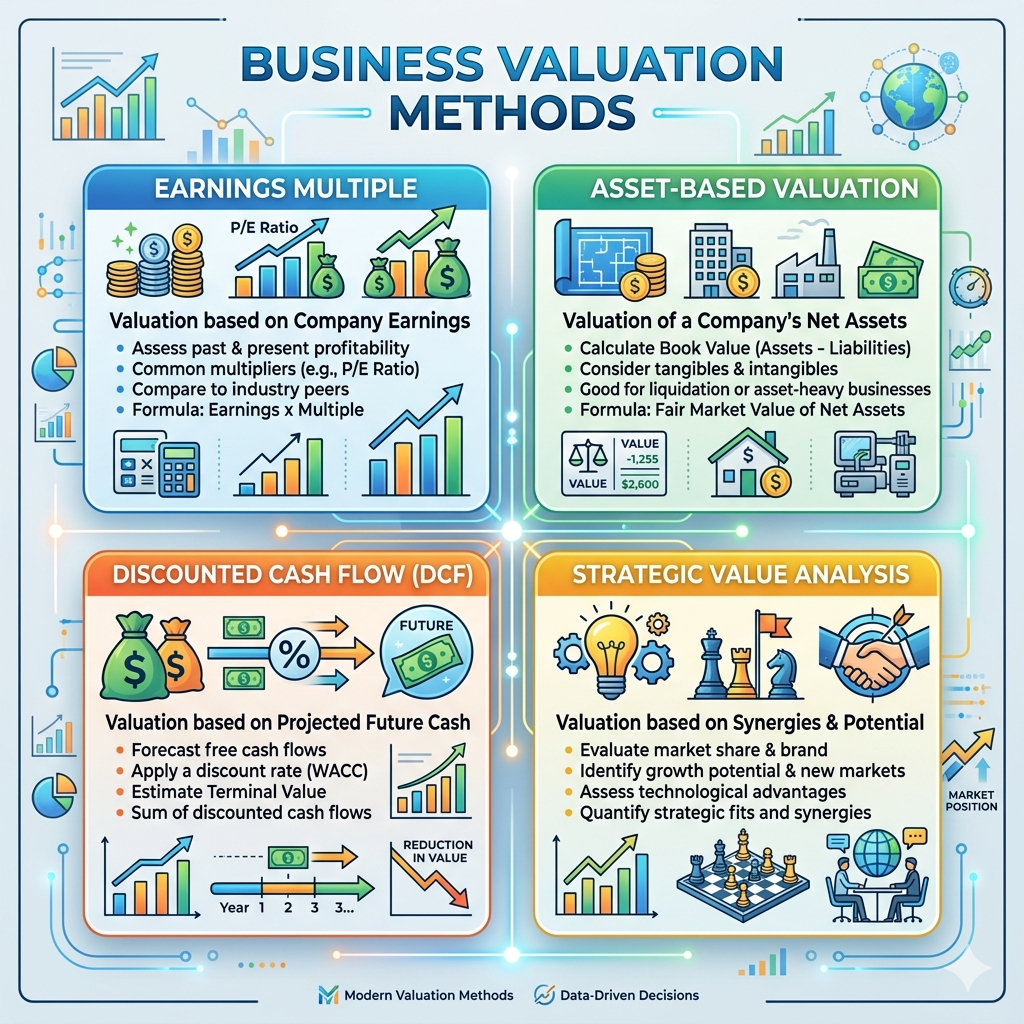
Best Methods to Value a Small Business in Nigeria
1. Earnings Multiple Method
This method applies a multiple to annual profit or EBITDA.
Examples include:
- Small service businesses may trade at 1x–3x yearly profit
- Digital businesses may attract higher growth multiples
- Retail businesses may receive lower valuations due to operational risk
The exact multiple depends heavily on scalability and risk.
2. Asset-Based Valuation
This approach focuses on physical and financial assets.
Assets may include:
- Inventory
- Equipment
- Land and property
- Vehicles
- Cash reserves
This method is common in manufacturing, logistics, and industrial businesses.
3. Discounted Cash Flow (DCF)
DCF estimates future earnings potential based on projected cash flow.
Although more technical, this method helps investors estimate long-term profitability.
4. Strategic Value Analysis
Some businesses hold strategic value beyond immediate profit.
This may include:
- Brand recognition
- Online audiences
- Technology systems
- Distribution networks
- Customer databases
Why Scalability Greatly Influences Business Valuation
In 2027, investors increasingly Value a Small Business in Nigeria based on scalability instead of short-term revenue alone.
Scalable businesses can grow revenue without operating expenses increasing at the same rate.
Examples include businesses with:
- Automation systems
- Digital products
- Subscription revenue
- Online communities
- Low operational friction
This explains why many investors prioritize scalable systems before profitability. Learn more here: Scalable Business Definition Investors 2026: Why Most Startups Fail Scalability Tests Before Profit.
Digital Assets Are Increasing Business Value
One major shift in modern business valuation is the growing importance of digital assets.
Today, investors increasingly Value a Small Business in Nigeria based on digital infrastructure such as:
- Websites
- YouTube channels
- Email subscriber lists
- SEO traffic
- Mobile apps
- Digital communities
Unlike temporary income streams, digital assets can continue generating leads and customers over time.
Many entrepreneurs begin their journey through:
- Freelancing
- Affiliate marketing
- Content creation
- Online consulting
- Small digital tasks
These beginner income methods can provide useful experience and learning opportunities.
However, realistic expectations are important.
Most small online income methods generate limited earnings initially and should not be viewed as guaranteed long-term solutions.
Long-term business value usually improves when entrepreneurs transition toward scalable digital systems.
Some business-focused teams such as Valspill Team help entrepreneurs build websites, apps, monetized content systems, and scalable digital infrastructure correctly for long-term revenue growth.
The growth journey often looks like this:
Learning → Small Income → Audience Building → Digital Assets → Scalable Revenue

Customer Retention Strongly Influences Valuation
Businesses with repeat customers often receive stronger valuations.
Why?
Because predictable customers reduce investor uncertainty.
Examples include:
- Subscription businesses
- Maintenance contracts
- B2B service agreements
- Membership platforms
- Recurring supply businesses
Reliable customer retention often signals long-term sustainability.
Case Study: A Small Logistics Company Expansion
A logistics startup operating between Lagos and Ogun State struggled to attract investors because there were no public comparable sales records available.
The founder improved valuation credibility by organizing:
- Monthly financial reports
- Customer retention data
- Delivery performance metrics
- Fuel cost tracking
- Operational efficiency reports
Within 18 months, the business improved operational systems and later secured expansion financing.
This example shows that investors often focus more on structure, sustainability, and systems than hype alone.
Why Compliance Improves Business Valuation
Businesses with weak compliance systems usually appear riskier to investors.
Founders should maintain:
- CAC registration
- Annual returns filing
- Tax records
- Operational documentation
- Employment records
This guide explains filing obligations and penalties in Nigeria: Essential CAC Annual Return Filing in Nigeria 2027: Costs, Penalties, Deadlines and Compliance Guide.
Business Plans Still Matter to Banks and Investors
Businesses seeking financing often need structured business plans.
Modern Nigerian banks increasingly expect:
- Revenue projections
- Operational structure
- Cash flow forecasts
- Risk analysis
- Growth strategy
This explains what CBN-licensed banks expect from modern businesses: Successful Business Plan for Bank Loan in Nigeria (What CBN Licensed Banks Expect in 2026).
Nigerian Business Culture Also Influences Investor Decisions
In Nigeria, investor confidence is not based purely on numbers.
Business relationships, communication style, negotiation behavior, and local market understanding often influence valuation discussions.
This guide explains key business culture rules investors should understand: Nigerian Business Culture in 2026/2027: 23 Rules Foreign Investors Must Understand Before Signing Deals.
Why Some Funded Startups Still Collapse
Funding alone does not automatically create business value.
Some startups still fail because they lack:
- Operational discipline
- Scalable systems
- Cash flow management
- Market demand
- Long-term sustainability
This explains why many funded startups still struggle across Africa: Startup Accelerator Failure In Africa 2027 (Why Funded Startups Still Collapse).
Pricing Strategy Also Influences Valuation
Businesses with disciplined pricing systems often maintain healthier margins and stronger long-term sustainability.
Strong pricing helps businesses:
- Protect profit margins
- Manage inflation pressure
- Improve operational stability
- Reduce financial risk
This guide explains modern pricing systems for African markets: Product Pricing Strategy In Africa (How to Stay Profitable in 2027 Competitive Markets).
Trusted Resources for Business Valuation Research
According to the World Bank, businesses with stronger operational transparency and financial systems often improve their long-term investment attractiveness in emerging economies.
Entrepreneurs can also review official compliance requirements directly from the Corporate Affairs Commission (CAC) when preparing businesses for investor due diligence.
Founders researching financing opportunities may also explore resources from the Central Bank of Nigeria (CBN).
Common Mistakes When Entrepreneurs Value a Small Business in Nigeria
- Using emotional pricing instead of financial analysis
- Ignoring operational risks
- Overestimating future revenue
- Failing to organize financial records
- Ignoring scalability limitations
- Relying only on social media popularity
Strong valuation requires realistic analysis and operational discipline.
Final Thoughts
Learning how to Value a Small Business in Nigeria correctly is becoming increasingly important in 2027.
Even without comparable sales data, businesses can still build strong valuations through:
- Cash flow consistency
- Operational transparency
- Scalable systems
- Customer retention
- Digital infrastructure
- Financial discipline
Small online income opportunities may provide useful starting experience, but long-term business value usually comes from building systems that can scale sustainably over time.
Entrepreneurs who focus on operational structure, audience ownership, digital assets, and realistic financial planning may position themselves more effectively for investment and long-term business growth.
Frequently Asked Questions (FAQ)
How do investors Value a Small Business in Nigeria?
Investors usually evaluate profitability, scalability, operational systems, customer retention, risk exposure, and cash flow stability.
Can you Value a Small Business in Nigeria without comparable sales data?
Yes. Businesses can still be valued using earnings multiples, asset analysis, cash flow projections, and scalability assessment.
Why does scalability matter when investors Value a Small Business in Nigeria?
Scalable businesses can grow revenue efficiently without costs increasing at the same rate, making them more attractive to investors.
Do digital assets increase business value?
Yes. Websites, apps, SEO traffic, online audiences, and digital communities increasingly influence modern business valuation.
Why are financial records important during valuation?
Proper financial documentation reduces investor uncertainty and improves financing opportunities.
Can small online businesses become valuable?
Yes. Businesses with scalable systems, recurring audiences, and sustainable revenue models can grow significantly in value over time.