

Running a business in Nigeria has never been easy, but 2027 presents even bigger financial challenges for entrepreneurs.
Rising operating costs, inflation, unstable exchange rates, tighter competition, and changing customer behavior are forcing business owners to pay closer attention to their numbers.
That is why understanding financial ratios for Nigerian businesses is becoming essential for survival and long-term growth.
Whether you run a small supermarket in Enugu, a fashion brand in Lagos, an agribusiness in Benin, or a digital startup in Abuja, monthly financial reviews can help you avoid costly mistakes and improve profitability.
Many businesses generate impressive sales but still struggle financially because they fail to monitor their actual financial health.
Tracking financial ratios for Nigerian businesses monthly gives entrepreneurs a clearer understanding of cash flow, debt levels, profitability, operational efficiency, and sustainability.
Instead of relying on assumptions, successful business owners now use financial data to guide decisions.

Why Financial Ratios for Nigerian Businesses Matter in 2027
Business conditions across Nigeria continue evolving rapidly.
Fuel prices, logistics costs, imported raw materials, taxes, and utility expenses are affecting both small and large companies.
According to reports from World Bank and PwC Nigeria, poor financial management remains one of the leading reasons businesses fail in developing economies.
This is why reviewing financial ratios for Nigerian businesses every month is no longer optional.
These ratios help business owners:
- Detect financial problems early
- Improve pricing strategies
- Control operational costs
- Monitor cash flow
- Prepare for loans and investors
- Improve long-term business sustainability
Entrepreneurs planning long-term expansion should also understand why scalability matters before profitability.
This guide explains more: Scalable Business Definition Investors 2026: Why Most Startups Fail Scalability Tests Before Profit.

1. Gross Profit Margin
What It Means
Gross profit margin measures how much profit remains after deducting direct production or service delivery costs.
Among the most important financial ratios for Nigerian businesses, this metric helps owners understand whether their products or services are generating healthy returns.
Formula
Gross Profit Margin = (Revenue – Cost of Goods Sold) ÷ Revenue × 100
Example
A bakery in Port Harcourt earns ₦6 million monthly revenue but spends ₦4 million on flour, sugar, diesel, labor, and packaging.
The remaining ₦2 million becomes gross profit.
If raw material prices rise sharply without pricing adjustments, profit margins decline quickly.
Why It Matters
- Helps monitor production efficiency
- Shows pricing weaknesses
- Reveals supplier cost problems
- Improves inventory planning
If your business struggles with pricing challenges, this related guide may help: Product Pricing Strategy In Africa (How to Stay Profitable in 2027 Competitive Markets).
2. Net Profit Margin
What It Means
Net profit margin measures the percentage of actual profit remaining after all expenses are deducted.
This includes:
- Rent
- Staff salaries
- Marketing expenses
- Transportation costs
- Taxes
- Loan repayments
- Utility bills
Formula
Net Profit Margin = Net Profit ÷ Revenue × 100
Practical Scenario
A fashion store in Lagos may generate strong online sales but spend heavily on influencer promotions, delivery logistics, online ads, and fuel costs.
Revenue may look impressive while real profitability remains weak.
This is why experienced entrepreneurs closely monitor financial ratios for Nigerian businesses instead of focusing only on sales numbers.
3. Current Ratio
What It Measures
The current ratio measures whether a business can meet short-term obligations using available short-term assets.
Formula
Current Ratio = Current Assets ÷ Current Liabilities
Why It Matters
Cash flow problems remain one of the biggest threats facing Nigerian businesses.
Delayed payments, rising expenses, unstable supply chains, and economic uncertainty can quickly create financial pressure.
Healthy liquidity remains one of the most important indicators within financial ratios for Nigerian businesses.
4. Debt-to-Equity Ratio
What It Means
This ratio compares total debt against owner investment or shareholder equity.
Formula
Debt-to-Equity Ratio = Total Debt ÷ Shareholders’ Equity
Why Nigerian Businesses Must Monitor It
Many companies rely heavily on loans for expansion.
While debt can support growth, excessive borrowing increases financial risk.
Banks and investors carefully review financial ratios for Nigerian businesses before approving funding requests.
If you plan to apply for financing, this guide explains what lenders expect: Successful Business Plan for Bank Loan in Nigeria (What CBN Licensed Banks Expect in 2026).
5. Inventory Turnover Ratio
What It Measures
Inventory turnover measures how quickly products are sold and replaced.
Formula
Inventory Turnover = Cost of Goods Sold ÷ Average Inventory
Why It Is Important
Low inventory turnover often indicates:
- Overstocking
- Weak demand
- Poor pricing
- Outdated inventory
Businesses that fail to monitor inventory properly often lose money through damaged, expired, or unsold products.
This is especially common among:
- Supermarkets
- Pharmacies
- Electronics stores
- Fashion retailers
6. Operating Expense Ratio
What It Means
The operating expense ratio measures how much revenue is consumed by daily operational costs.
Formula
Operating Expense Ratio = Operating Expenses ÷ Revenue
Why It Matters in 2027
Businesses across Nigeria continue facing higher:
- Fuel expenses
- Transportation costs
- Internet charges
- Rent
- Imported material costs
Tracking this metric monthly helps businesses control waste and improve operational efficiency.
Successful companies regularly analyze financial ratios for Nigerian businesses to identify unnecessary spending before it damages profitability.
7. Accounts Receivable Turnover
What It Measures
This ratio measures how quickly customers pay outstanding invoices.
Formula
Accounts Receivable Turnover = Net Credit Sales ÷ Average Accounts Receivable
Why It Is Important
Late payments continue affecting businesses across Nigeria.
Construction firms, suppliers, logistics companies, and agencies often experience payment delays from customers and contractors.
Monitoring this ratio helps businesses:
- Improve collections
- Reduce bad debt
- Strengthen cash flow
- Identify risky clients earlier
8. Return on Assets (ROA)
What It Means
ROA measures how effectively a business uses its assets to generate profit.
Formula
ROA = Net Income ÷ Total Assets
Example
A transport company may own multiple buses but still generate weak profits because of:
- Poor maintenance systems
- Fuel inefficiency
- Underutilized vehicles
- Weak route planning
Strong ROA often reflects better management efficiency.
9. Cash Flow Ratio
Why It Is Critical
Many businesses collapse despite recording profits because they lack enough cash to sustain operations.
Positive cash flow allows businesses to:
- Pay salaries
- Purchase inventory
- Handle emergencies
- Expand confidently
Formula
Operating Cash Flow Ratio = Operating Cash Flow ÷ Current Liabilities
Among all financial ratios for Nigerian businesses, cash flow analysis is often one of the most important for survival.
10. Customer Acquisition Cost (CAC)
What It Measures
Customer Acquisition Cost measures how much a business spends to gain each new customer.
Formula
CAC = Total Marketing Costs ÷ Number of New Customers
Why It Matters
Businesses using Facebook Ads, TikTok promotions, influencer marketing, or Google Ads should track this ratio carefully.
If customer acquisition costs exceed customer profitability, long-term sustainability becomes difficult.
Financial Ratios for Nigerian Businesses and Online Income Opportunities
In recent years, many Nigerians have explored side hustles, freelancing, affiliate marketing, and online earning opportunities.
However, it is important to set realistic expectations.
Beginner income platforms and small online tasks may provide useful starting income, but they rarely create long-term financial security by themselves.
The entrepreneurs who eventually build sustainable wealth usually transition into scalable digital systems such as:
- Websites and blogs
- YouTube channels
- E-commerce businesses
- Mobile apps
- Digital education platforms
The growth path often looks like this:
Beginner Income → Learning Skills → Building Digital Assets → Growing Traffic → Scaling Revenue
For example, a Nigerian freelancer may begin with small design jobs but later build a large educational platform or media brand generating advertising and subscription income.
Teams like Valspill increasingly help entrepreneurs develop scalable digital assets properly for long-term monetization and sustainable business growth.
Why Strong Financial Systems Help Businesses Scale
Businesses that consistently monitor financial ratios for Nigerian businesses are usually better prepared for expansion.
They often:
- Manage risk more effectively
- Qualify for funding faster
- Attract stronger investor confidence
- Improve operational efficiency
- Survive economic downturns better
This becomes especially important within Africa’s evolving startup ecosystem: Startup Accelerator Failure In Africa 2027 (Why Funded Startups Still Collapse).
Compliance Still Matters
Financial performance alone is not enough for long-term success.
Businesses also need proper regulatory compliance, annual filings, tax documentation, and corporate governance systems.
Business owners should review: Essential CAC Annual Return Filing in Nigeria 2027: Costs, Penalties, Deadlines and Compliance Guide.
Understanding Nigerian Business Culture
Business success in Nigeria also depends heavily on relationships, negotiation style, trust-building, and local operational realities.
Foreign investors and entrepreneurs should understand these dynamics before entering partnerships.
This guide explains key business culture insights: Nigerian Business Culture in 2026/2027: 23 Rules Foreign Investors Must Understand Before Signing Deals.
Common Financial Mistakes Nigerian Businesses Make
- Tracking sales without monitoring profitability
- Ignoring monthly financial reviews
- Mixing personal and business finances
- Expanding too aggressively using debt
- Failing to manage cash flow properly
- Relying entirely on unstable short-term income sources
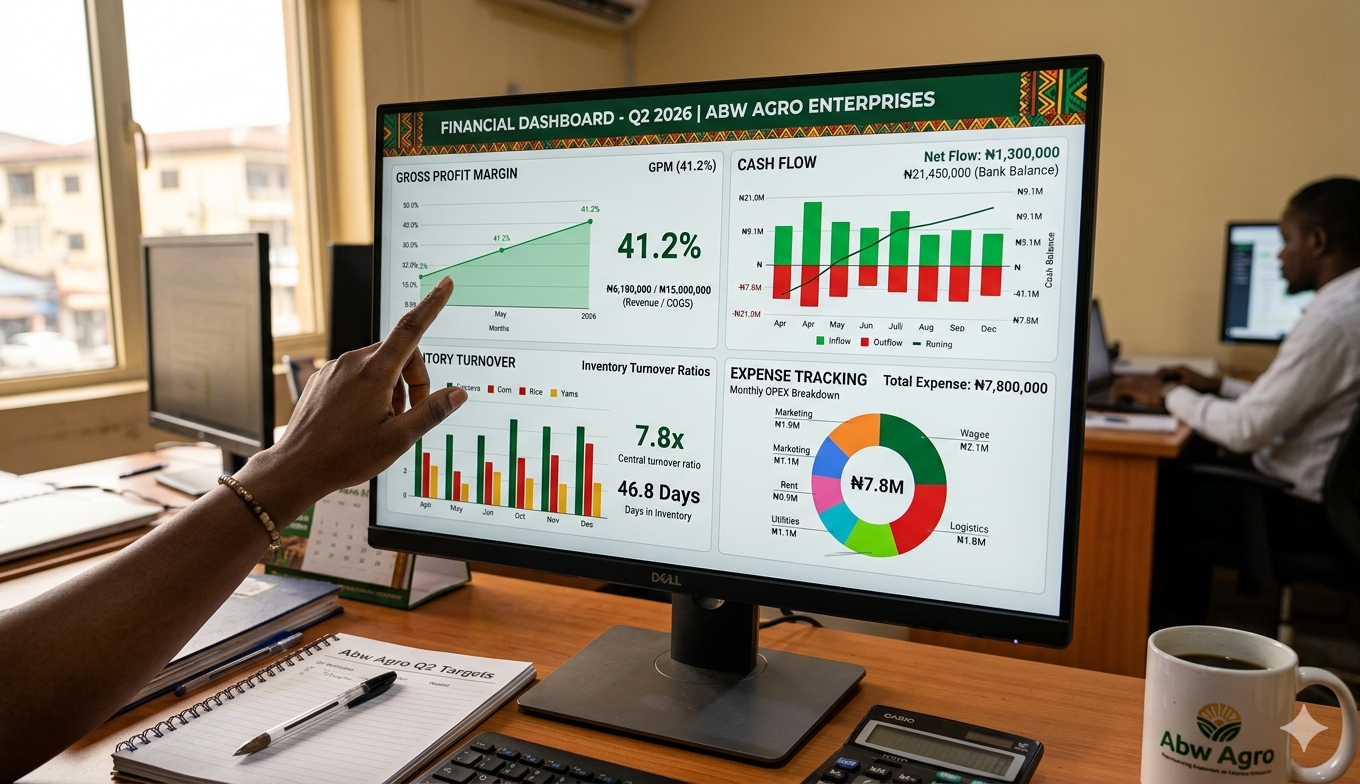
Monthly Financial Review Checklist
Every month, businesses should review:
- Revenue performance
- Gross profit margin
- Net profit margin
- Cash flow position
- Inventory performance
- Outstanding customer invoices
- Debt obligations
- Operational expenses
- Marketing efficiency
Consistently reviewing financial ratios for Nigerian businesses can significantly improve decision-making and long-term stability.

Conclusion
In today’s economy, understanding financial ratios for Nigerian businesses is no longer optional.
It is one of the most important skills modern entrepreneurs need to build sustainable companies.
Business owners who monitor financial performance monthly are usually better prepared to:
- Handle economic uncertainty
- Improve profitability
- Control expenses
- Scale responsibly
- Attract investors and lenders
Small online income opportunities may help people begin their entrepreneurial journey, but sustainable long-term wealth usually comes from building valuable systems and scalable business assets.
The businesses most likely to thrive in the future will combine:
- Financial discipline
- Strong operational systems
- Smart decision-making
- Scalable digital strategies
- Long-term thinking
If you want your company to grow sustainably in 2027 and beyond, start by reviewing your numbers every month.
The insights hidden inside your financial reports could completely transform your business decisions.
Frequently Asked Questions (FAQ)
What are financial ratios in business?
Financial ratios are measurements used to evaluate a company’s financial health, profitability, liquidity, and operational efficiency.
Why are financial ratios for Nigerian businesses important?
They help entrepreneurs monitor performance, improve cash flow, manage risk, and make smarter financial decisions.
How often should businesses review financial ratios?
Monthly reviews are ideal because they help identify problems early before they become serious financial issues.
Which financial ratio is most important for SMEs?
Cash flow ratio and net profit margin are among the most important because they directly affect business survival.
Do investors check financial ratios before investing?
Yes. Investors and banks usually review liquidity, profitability, debt levels, and cash flow before approving financing.
Can online businesses use financial ratios too?
Absolutely. E-commerce stores, blogs, YouTube channels, SaaS businesses, and digital platforms all benefit from financial tracking and analysis.