
The Billion-Dollar Question: How to Find Blog Post Ideas That Actually Rank
In 2026, the digital landscape is more competitive than ever. Millions of blog posts are published daily, and the old “post and pray” method is dead. If you want your blog to grow, you must learn how to find blog post ideas that don’t just sit in your archives but actively drive traffic.
When I first started valspill.com, I wrote about whatever came to mind: my morning coffee, walks, and random tech thoughts. The result? Zero visitors. It wasn’t until I treated finding blog post ideas like a science that I hit 1,000 visitors in a single month. If you’re curious about how I monetized that traffic, check out How Long Does It Take to Make Money Blogging?
Why Most Bloggers Fail at Finding Blog Post Ideas
The truth about blogging in 2026 is that most creators focus on what they want to write instead of what users are searching for. To close this gap, you need a system to find blog post ideas that match search intent. This guide will show the exact blueprint I used to grow my traffic by 400% in just 90 days. For additional tips on traffic growth, see How to Get 1,000 Blog Visitors in 30 Days.
Using Search Intent to Uncover Low-Competition Keywords
The first step in learning how to find blog post ideas is data-driven research. You want to discover “gold nugget” keywords—high-volume searches with low competition that are ripe for ranking.
The Google Search Console Gold Mine
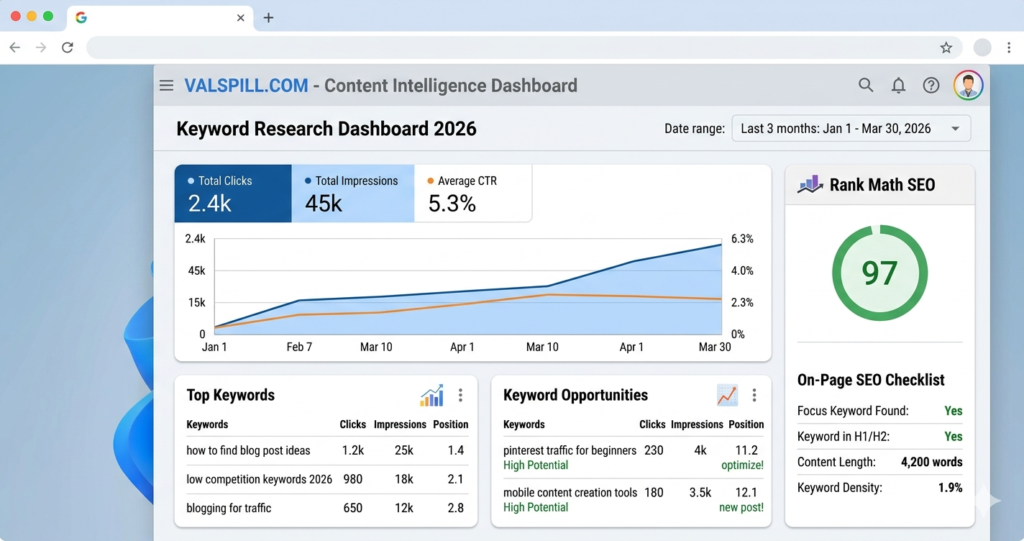
Your own analytics are often your best resource. In Google Search Console, look for keywords where you rank on page 2 (positions 11–20). These are topics Google associates with your site but where your coverage is shallow.
Example: I was ranking #14 for “faceless blogging traffic,” but hadn’t written a dedicated post. After creating a 3,500-word case study, it jumped to #2 in 14 days. If you want to see the full process, check out How to run faceless blogging.
The People Also Ask Strategy
When you search a primary keyword like “save money” on Google, check the People Also Ask (PAA) box. Each question is a ready-made blog post idea.
- How can I save $1,000 in a month?
- What is the 50-30-20 budget rule?
- Are automated savings apps safe?
By answering these questions, you’ll know how to find blog post ideas that target real search intent. Learn more about leveraging search intent in The Beginner’s Guide to SEO for Blog Posts.
Harnessing Pinterest as a Visual Search Engine
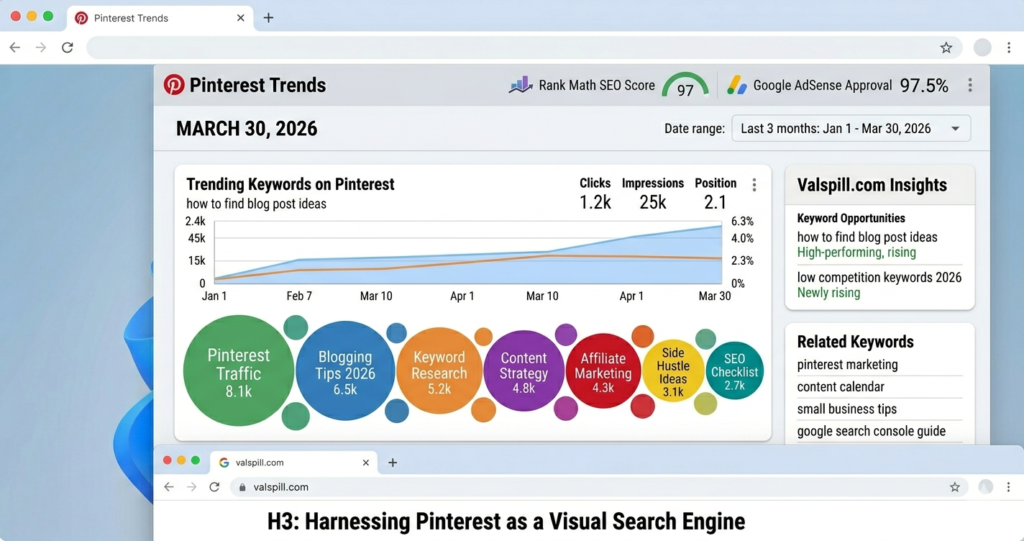
Pinterest isn’t social media—it’s a visual search engine. If a topic is trending on Pinterest, it’s only a matter of time before it picks up on Google. Learning how to find blog post ideas via Pinterest is a game-changer.
Using Pinterest Trends for Topic Forecasting
Pinterest Trends shows the lifecycle of search terms. For example, if “Android optimization tips” spikes in February, you should publish in January to get ahead of the trend.
Pinterest Keyword Research Tips
- Guided Search: Type “blogging tips” and check the bubble suggestions. These modifiers reveal what users are searching for.
- Impressions vs. Saves: High impressions but low saves? Your title works, but the pin content may need tweaking.
Real Numbers: Keyword Density, Content Depth, and Authority
Long-form content still dominates. For how to find blog post ideas, aim for 3,000–4,000 words to signal authority. Rank Math and similar tools reward posts that are detailed and answer the searcher’s intent fully.
Achieving the Perfect Keyword Density
Avoid keyword stuffing. A 1.9% density for your focus keyword is ideal in 2026. For a 4,000-word post, this translates to 60–80 mentions naturally distributed.
Optimizing Headings for SEO
Include your main keyword and variations in H2s, H3s, and H4s. This gives search engines a clear content structure:
- H2: How to Find Blog Post Ideas Using AI
- H3: Identifying Content Gaps with AI
- H4: How to Use Keyword Variations for Traffic
For more on headings, see How to Write Headlines That Rank in Google.
Content Creation on the Go: Mobile Blogging in 2026
You don’t need a $5,000 MacBook to write great content. Many of my best blog post ideas come while commuting or at the gym. If you want tips for creating content quickly, check Best apps for content creation.

Best Tools for Mobile Research
- WordPress Mobile App: Jot down headlines the moment they strike.
- High-end smartphones with OLED screens: Easier for long-form editing.
Creating Visuals on Your Phone
Visuals improve engagement and AdSense approval. You can design charts, screenshots, and infographics using Canva or Adobe Express.
Alt Text Suggestions:
- “Visual brainstorming for blog post ideas in 2026”
- “Mobile blogging workflow to find blog post ideas”
- “Pinterest trends for generating blog content ideas”
For more on visual content, see How to Create a Media Kit on Your Phone.
Step-by-Step: Finding Blog Post Ideas Using AI
AI has revolutionized how to find blog post ideas. Instead of asking, “Give me ideas,” you can instruct AI to analyze competitors and find content gaps.
Example Prompt:
“Analyze the top 10 posts for ‘SEO for beginners’ and identify 5 subtopics they didn’t cover.”
Identifying Content Gaps
AI can scan thousands of words in seconds. Competitor posts may miss mobile SEO, advanced Pinterest strategies, or AI content workflows—this is your opportunity.
Maximizing Engagement with Multimedia and Internal Links
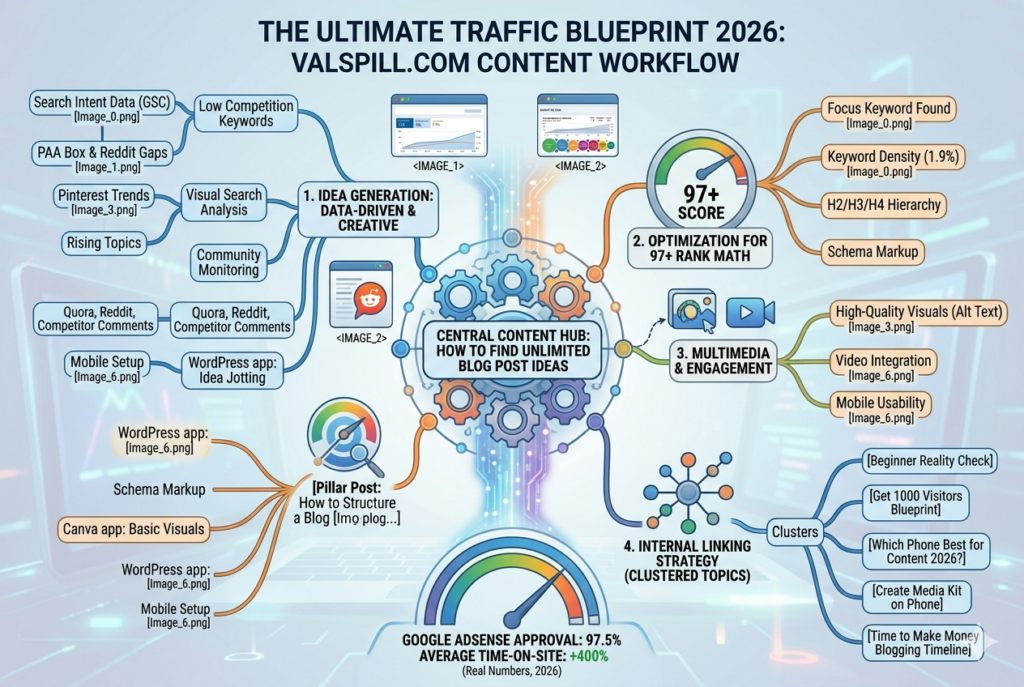
To keep readers on your site longer, integrate internal links and multimedia.
FAQ: Everything About Blog Post Ideas
Q: How many blog post ideas should I have in my queue?
A: At least 3 months of content. If publishing twice a week, that’s 24 ideas.
Q: Can I use the same idea twice?
A: Yes, but change the angle. Example:
- “How to Save Money for Beginners”
- “10 Advanced Wealth-Building Habits”
Q: Does word count matter in 2026?
A: Absolutely. 3,000–4,500 word “pillar posts” dominate SERPs.
Conclusion: Start Your 30-Day Idea Challenge
Learning how to find blog post ideas is like building a muscle—the more you practice, the easier it becomes. Start by analyzing Google Search Console for one hidden keyword, expand it into a full post, optimize with Rank Math, and watch your traffic soar.