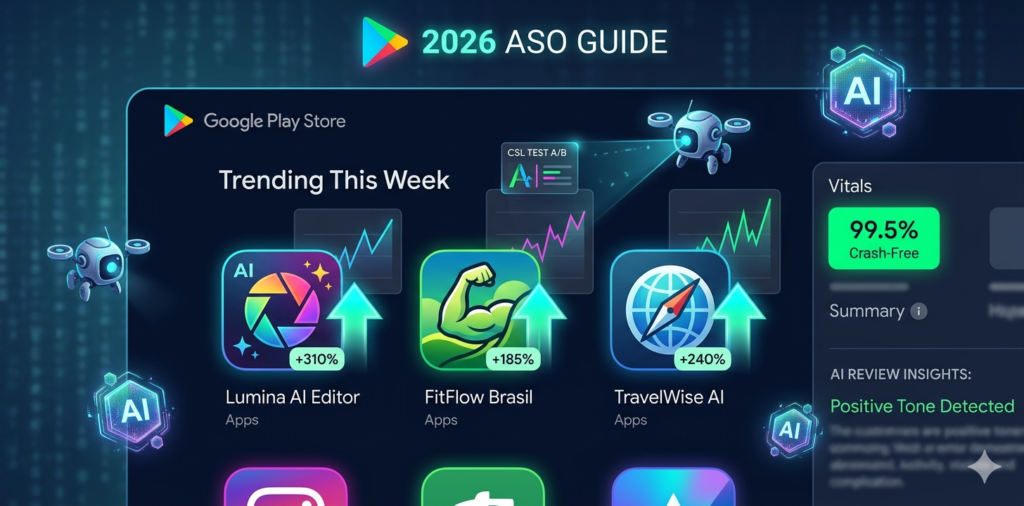
📌 Introduction: Why 90% of Apps Fail in 2026
90% of apps on the Play Store never cross 1,000 downloads—not because they are bad, but because they are invisible.
In Google Play Store Optimization 2026, visibility is no longer about stuffing keywords. Instead, success depends on user intent signals, engagement metrics, and technical authority.
Google’s AI-powered ecosystem, led by tools like Google Play Store and advancements from Google Gemini, now understands what users mean, not just what they type.
👉 If someone searches: “fix blurry photos”
Google shows AI-enhancing apps—even if those exact words are missing.
To truly grow, you must combine ASO with smart usage of the Play Store itself. If you’re new, learn how to navigate it effectively in How To Use Play Store Like a Pro in 2026.
🔥 The New Era of Google Play Store Optimization 2026
AI-Driven Discovery Has Changed Everything
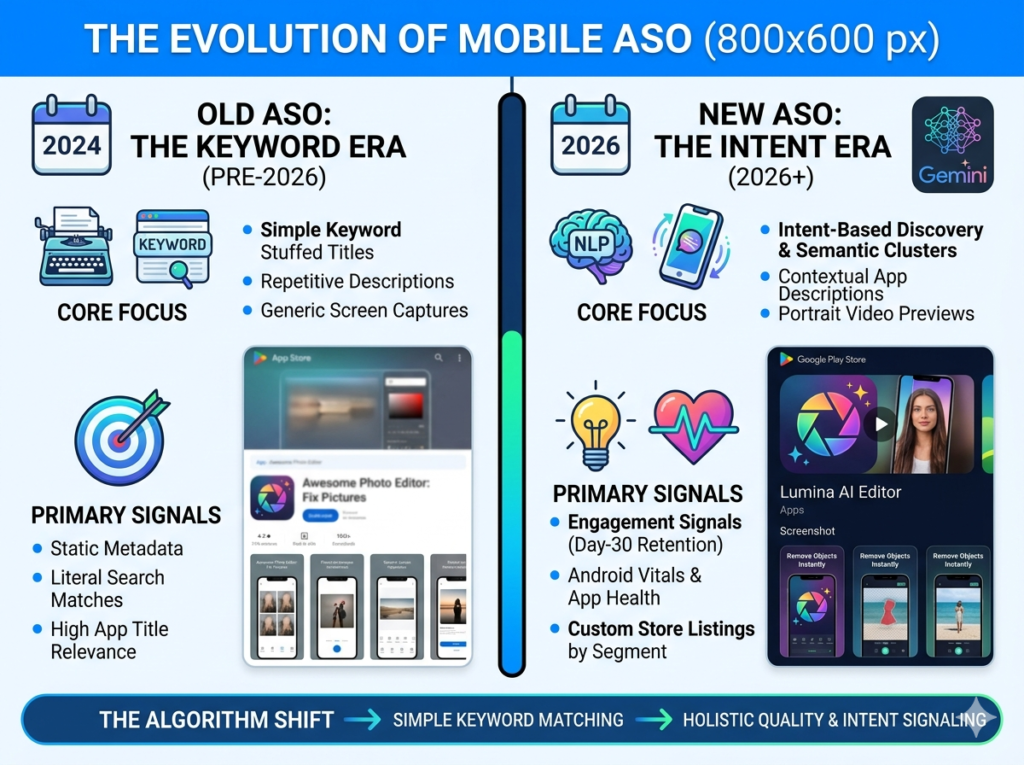
ASO today is about semantic understanding.
Key Shift:
- ❌ Old ASO: Keyword repetition
- ✅ New ASO: Intent + behavior
Real Example:
A finance app with:
- 40% retention
- 5 sessions per week
can outrank a bigger app with poor engagement.
👉 This is why understanding user behavior is now as important as knowing keywords.
🧠 Title and Metadata in Google Play Store Optimization 2026
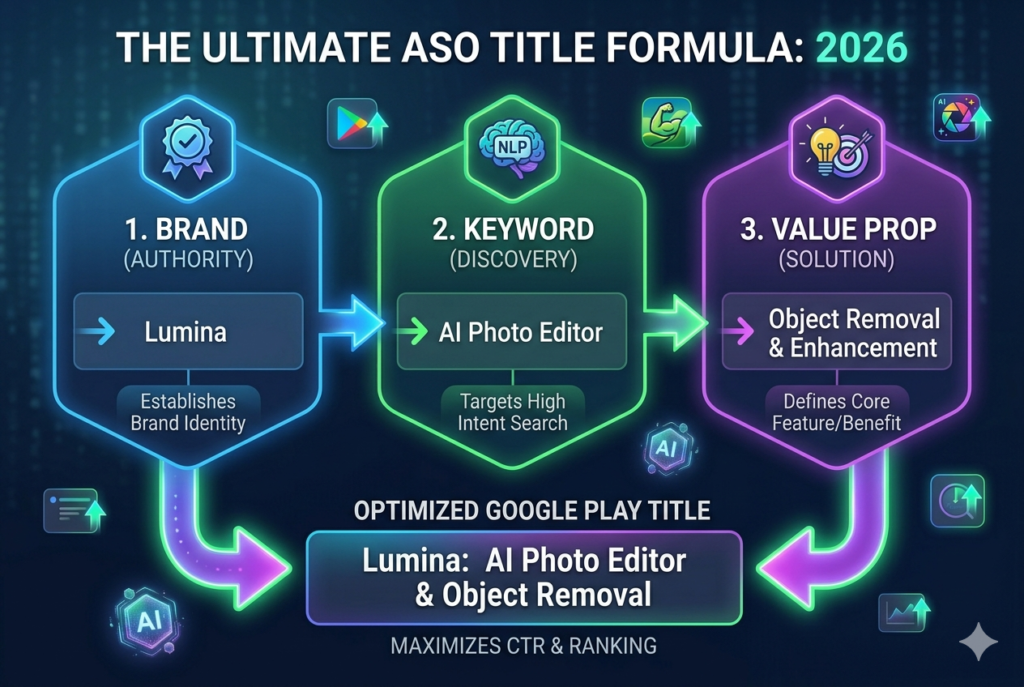
The Perfect Title Formula
Structure:
👉 Brand + Keyword + Value Proposition
Example:
Lumina: AI Photo Editor & Object Removal
Short Description Optimization
This 80-character section determines whether users click or scroll.
Good:
“Enhance photos, remove objects & fix blur instantly with AI”
Bad:
“Best app for editing photos with friends”
Long Description SEO Strategy
- Use natural keywords
- Focus on clarity
- Highlight benefits
If your app helps with productivity, tools like How to Use Google Drive for Beginners (Step-by-Step) can inspire how users expect functionality and clarity in apps.
🎨 Visual Strategy in Google Play Store Optimization 2026
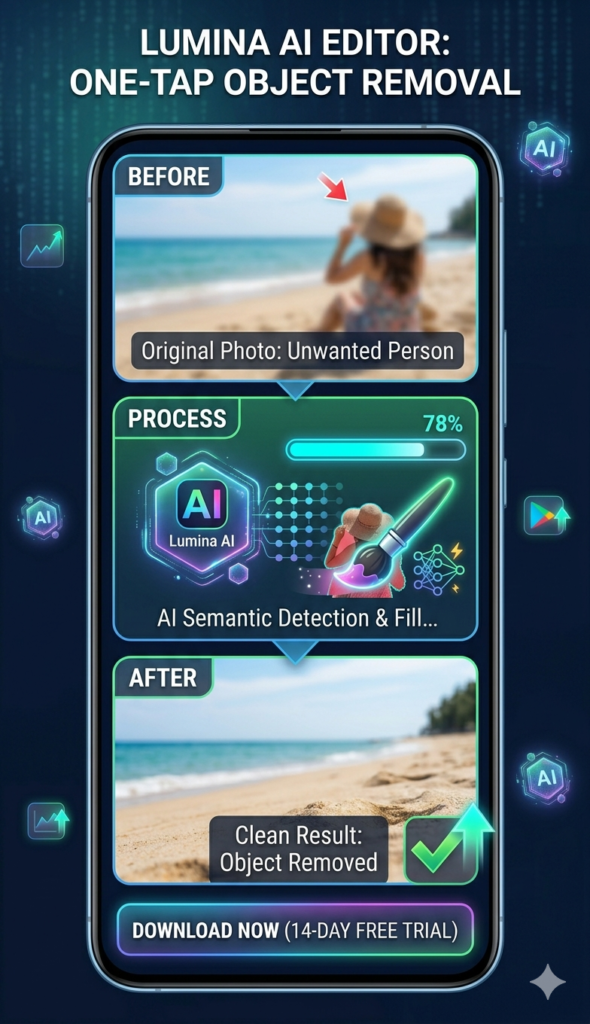
Screenshot Storytelling Framework
The First Three Rule:
- Show final result
- Show simplicity
- Show trust
Apps in the Best Apps for Content Creation category often dominate because of strong visuals.
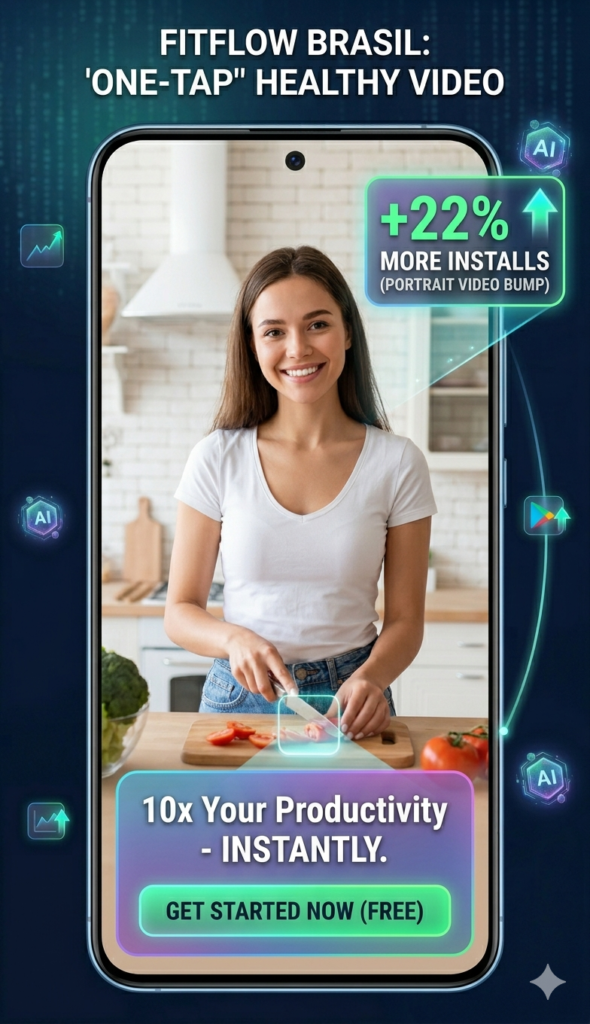
Vertical Video is Now Essential
Google Play now auto-plays videos.
👉 Apps using vertical previews see up to 22% more installs
If you’re testing visuals, having a powerful device matters—see Best phone for content creation for optimal performance testing.
⚙️Technical Performance in Google Play Store Optimization 2026
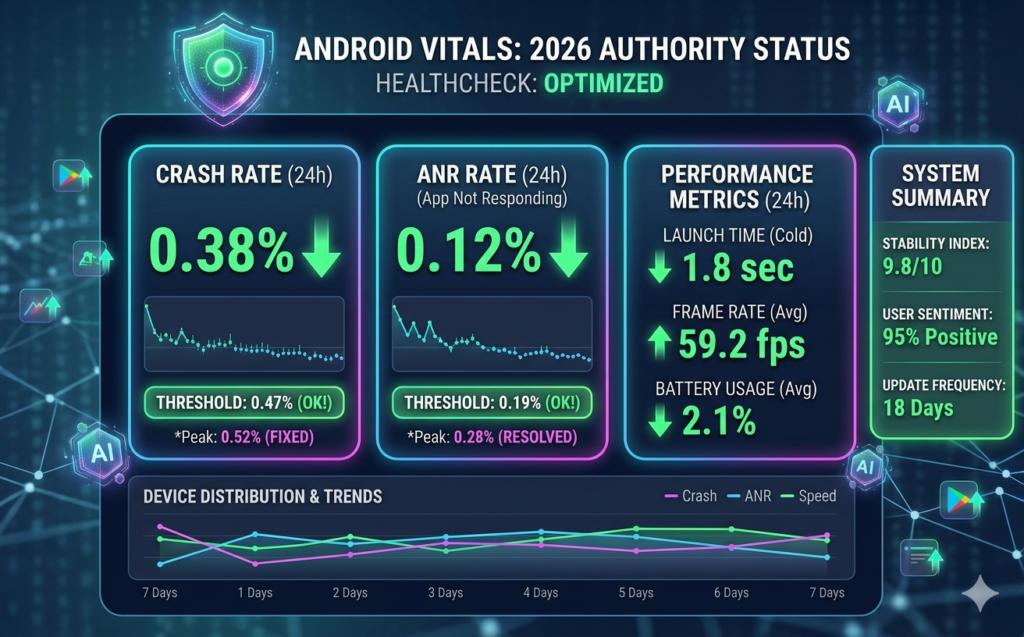
Android Vitals Matter
- Crash Rate < 1.09%
- ANR Rate < 0.47%
Exceeding these reduces visibility drastically.
Performance = Ranking Power
Apps with smoother performance:
- Rank higher
- Retain users longer
If you’re exploring performance tweaks, you’ll find useful insights in Android 16 Hidden Features: 7 Powerful Secret Settings That Will Transform Your Phone.
🔍 Keyword Strategy for Google Play Store Optimization 2026
Intent-Based Keywords
Instead of:
- “photo editor”
Use:
- “AI photo enhancer for blurry images”
Long-Tail Keywords Drive Installs
Benefits:
- Lower competition
- Higher conversion
Keyword Placement Strategy
Place keywords in:
- Title
- Description
- Subheadings
Google’s official Android developer documentation (external reference) also emphasizes clarity and user-focused descriptions:
🌍 Localization in Google Play Store Optimization 2026
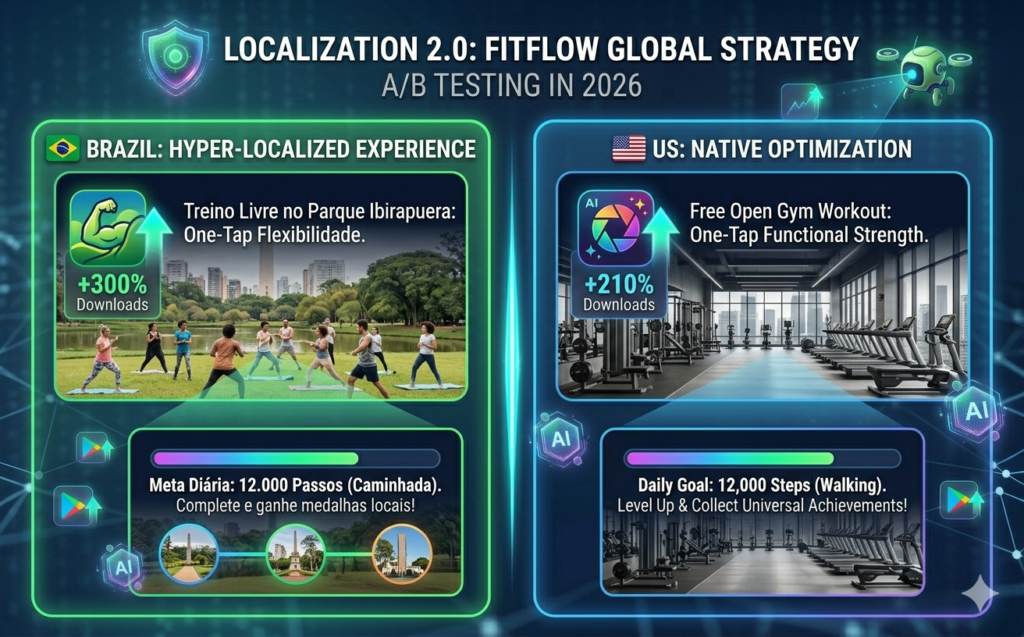
Hyper-Localization Wins Markets
Real Case Study:
A fitness app increased downloads by 300% in Brazil by:
- Using local visuals
- Adapting language tone
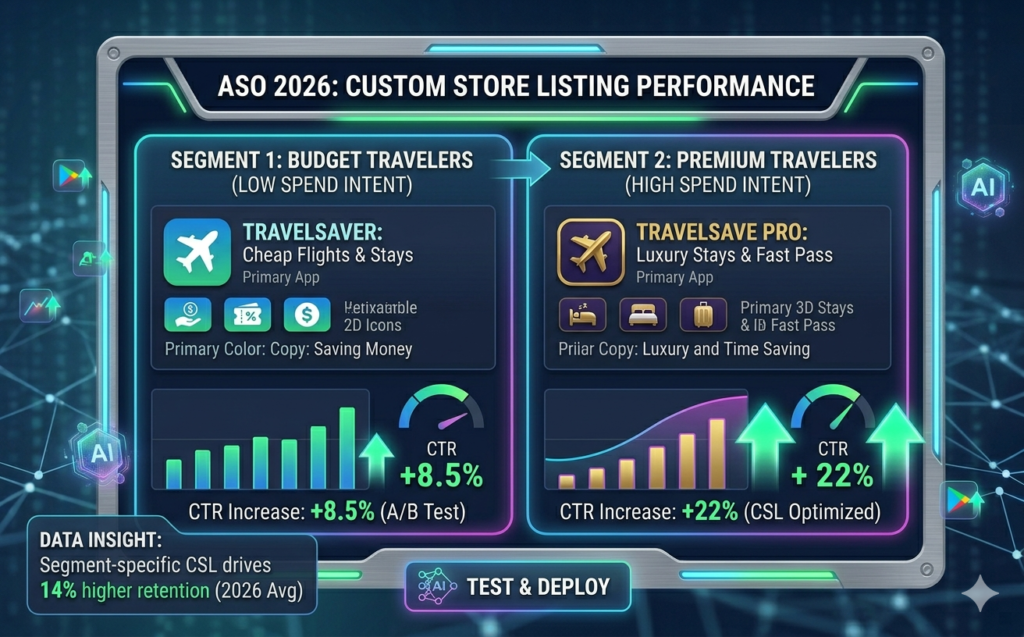
🎯 Custom Store Listings Strategy
Personalized Experiences Increase CTR
Example:
- Budget users → cheap deals
- Premium users → luxury features
👉 This improves conversion significantly.
To amplify reach, pairing this with influencer outreach (see How to Create a Media Kit in 2026) can drive targeted traffic.
🌐 External Traffic and Authority Signals
Backlinks Improve App Visibility
Google considers:
- Website mentions
- Blog backlinks
- YouTube traffic
Influencer Impact
When influencers promote your app:
👉 It boosts trust and installs
If you’re building online presence, explore 7 High-Demand Tech Skills in 2026 That Can Earn You $150K+ to understand digital growth opportunities.
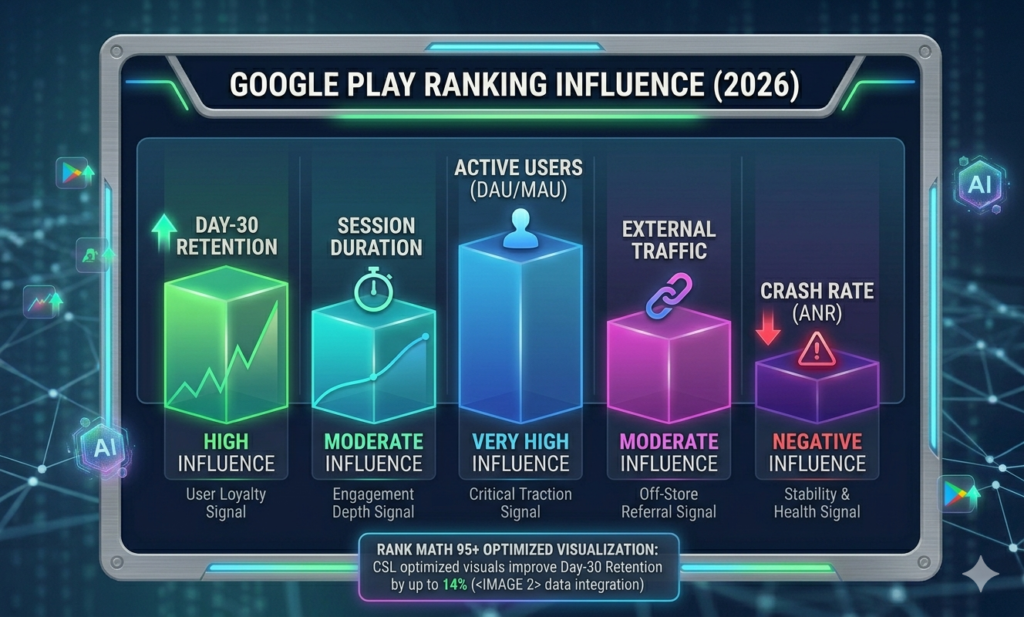
📊 Engagement Metrics in Google Play Store Optimization 2026
Core Signals
- Retention
- Session duration
- Active users
Apps featured in 20 Best Free Apps Every Beginner Should Have in 2026 (Save Money) often succeed because they excel in these metrics.
Engage SDK Advantage
Apps using it:
👉 See 14% higher retention
🧩 How Google Play Ranking Works in 2026
Ranking Factors
- Keywords
- CTR
- Retention
- Performance
- External traffic
🚀 Action Plan to 10X Downloads
Immediate Steps
- Optimize title
- Improve screenshots
- Add video
- Fix crashes
- Use CSL
- Get reviews
🖼️ Visual Insights
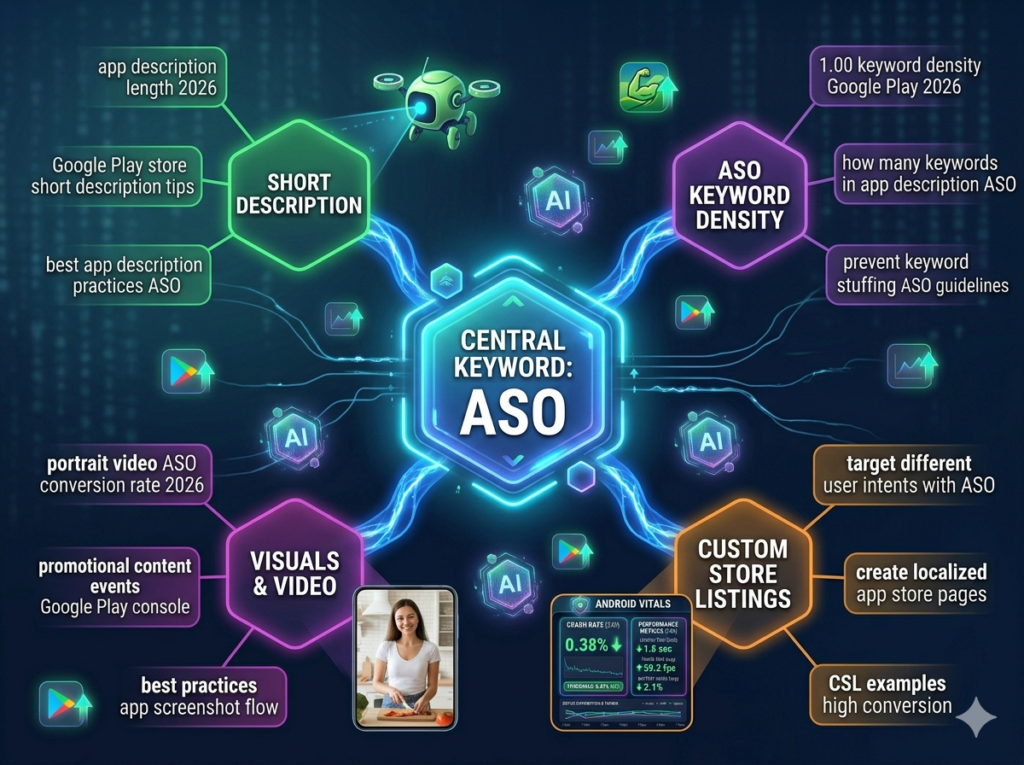
Alt Text: Google Play Store Optimization 2026 ASO dashboard and keyword strategy
❓ FAQ: Google Play Store Optimization 2026
1. How long does ASO take to show results?
Typically, keyword ranking changes appear within 7–10 days, but visual conversion improvements like screenshots and videos reflect almost instantly in your Play Console analytics.
2. Does the total number of downloads still matter?
Yes, but the velocity of downloads in the past 24–48 hours is more important than total lifetime downloads. Google values trending and actively used apps.
3. Should I use AI to write my app description?
You can use AI like Gemini or ChatGPT to draft descriptions, but you must manually edit for semantic intent, readability, and Google Play Store Optimization 2026 nuances. Low-effort AI spam can be de-prioritized.
4. Is a 5-star rating enough to rank #1?
No. An app with 4.2 stars and high retention and usage frequency can outrank a 5-star app with few reviews. Engagement signals are crucial.
5. How many screenshots should I have on my Play Store listing?
At minimum, use 5–8 screenshots, with the first three telling a story: end result, process, and social proof. Vertical preview videos should accompany them for maximum CTR.
6. What is the best video length for Google Play Store Optimization 2026?
Short-form, vertical videos 5–15 seconds long are optimal. Ensure the first 2 seconds hook the user and clearly demonstrate the app’s core value.
7. Should I localize my app listing?
Absolutely. In 2026, hyper-localization is more effective than simple translation. Adapt screenshots, copy, and visuals to reflect local cultures and user preferences, like using local parks for fitness apps in Brazil.
8. Do custom store listings (CSL) really improve conversion?
Yes. Showing different app pages based on user intent can increase CTR and downloads. Example: budget users see “Cheap Flights,” luxury users see “First-Class Deals.”
9. How important are external backlinks for Play Store ranking?
External traffic signals, including website backlinks, tech blog mentions, and YouTube referrals, increase Play Store authority and improve app ranking. Treat your Play Store page like a website.
10. Can app crashes affect my ranking?
Yes. Google tracks ANR (<0.47%) and crash rates (<1.09%). Exceeding these thresholds for more than a week can reduce visibility by ~35%.
11. Does Google consider user retention?
Yes. Day 1, Day 7, and Day 30 retention rates are critical ranking factors. Apps with high engagement are favored over apps with high download volume but low retention.
12. How often should I update my Play Store listing?
Every 3–6 weeks is recommended. Updates should align with:
- New features
- Seasonal trends
- Keyword performance
- Visual improvements
13. Do keywords in headings (H2/H3) improve ASO?
Yes. Integrating keywords in subheadings signals relevance to Google Play’s indexer and improves discoverability. For example: H2 like “Keyword Strategy for Google Play Store Optimization 2026” works best.
14. Can influencer marketing impact my Play Store ranking?
Yes. When influencers link your app, Google interprets it as trust and referral authority, boosting both ranking and downloads.
15. Are reviews more important than ratings?
Both matter, but volume and recency of reviews can outweigh average rating. Encourage users to leave specific, positive feedback after successful interactions.
🏁 Conclusion
Mastering Google Play Store Optimization 2026 requires a balance of:
- Smart keyword strategy
- Strong visuals
- Technical performance
- User engagement
👉 Focus on these, and your app will not just grow—it will dominate.